Categories
New

Things 2026 Q2: Fisherian runaway, Androids, effortful music videos

Quotes

Here’s some nice quotes that all draw out aspects of the Dunning-Kruger bias:

Idealism increases in direct proportion to one’s distance from the problem

– John Galsworthy

Ignorance more frequently begets confidence than does knowledge

– Charles Darwin

Everything looks simple when you don’t know the first thing about it

– Kevin Williamson

Having established that, I now return to confidently holding forth on things I’m not an expert in, probably annoying Darwin in particular. I leave you to judge how sensible that is.

Super-normal stimuli and Fisherian runaway

Bear with me on this one as I invoke the principles of sexual selection to explain burgers that are too tall to bite.

Part 1: Gestalt Perception

Perception usually feels effortless, but the process that makes it work is strange and subtle. Dozens of contextual clues (sight/sound/smell, movement/light/texture, size/silhouette/colour, and many more) are all subconsciously processed, usually based on previously observed patterns, and our conscious attention is directed to whatever that process deems the most salient aspect. For example, you might see a poster you’ve never seen before, but it has a picture of an actor you know, some words in an elaborate font, a release date and some small print, and without effort you recognise it as a film poster, as well as a good guess for the genre and if it’s likely to be worth paying more attention to.

The way many parts contribute subconsciously to our overall perception is summed up by the slang term ‘vibes’, but over the decades other terms have approximated this idea – ‘vibrations’ of course, but also in different contexts bag, energy, flavour, and more recently aura or “x-coded” (for something with various signifiers of x). Similarly people say an idea ‘doesn’t pass the sniff test’, not because they can smell abstract concepts, but because of how it comes across in almost every other way.

Part 2: Supernormal stimulus

Certain aspects of perception have clear dimensions to them. Most obviously things like bigger/taller/longer but also brighter/more-textured/more-saturated, and beyond. If we recognise an object based on it being notable in some dimension, an object with a stronger version of that attribute can register more quickly and more strongly as a signifier of that object. Further, I think that obviousness biases us to rate it as a ‘better’ example of that object in some way. If it has an unnaturally pronounced example of that attribute it can become a supernormal stimulus.

Wikipedia gathers some examples from the natural world here, for example:

  • Birds will nurture fake eggs over their own if they are larger or more saturated (and Cuckoos exploit this fact)
  • Butterflies that select mates by bright colour markings will prefer orange paper model butterflies over receptive real mates
  • Herring gull chicks seeking a parental beak for food will choose a red stick with yellow markings over a faithfully reproduced yellow-beak-with-red-dot replica gull head

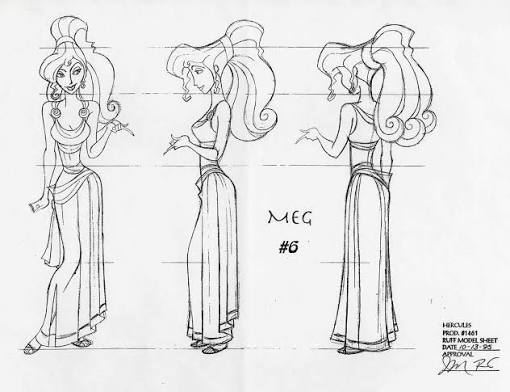
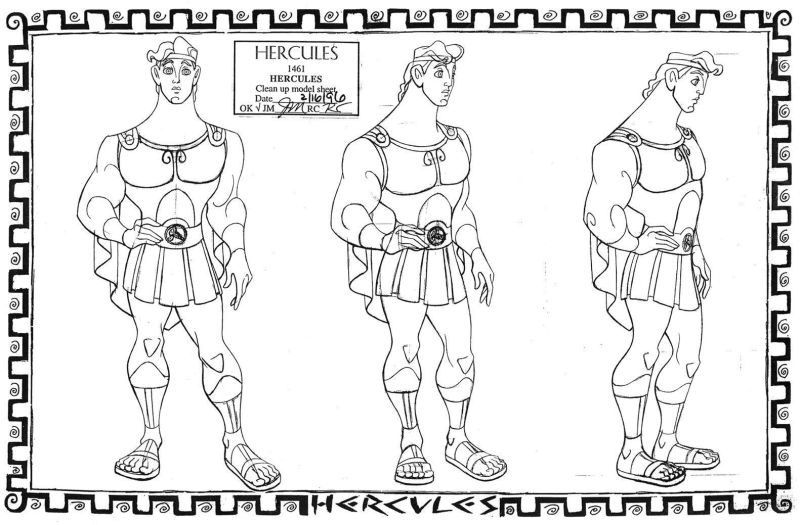
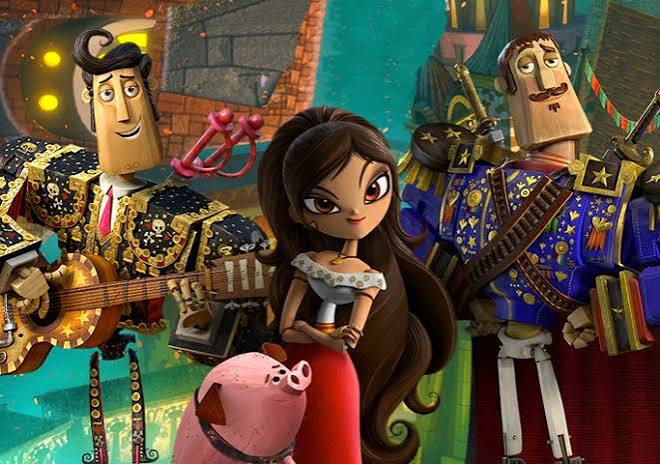
Of course, we can intuitively understand this without tricking small animals in laboratory settings, because we are animals ourselves. For example, a drawing of a woman with a dramatically high hip/waist ratio or a man with an implausibly pronounced shoulder/waist ratio will read as stronger and more obvious examples of each sex, even if those ratios go beyond what nature would naturally produce. Some examples:

Designs from Disney’s Hercules (1997) – exaggerated but legible:
Designs from The Book of Life (2014) – frighteningly extreme, still works:
Beyond human secondary sexual characteristics, we can experience it in pretty much everything. A giraffe with an extra long neck is extra giraffe-ey; a stretched limo is an even greater affluence signifier than a regular limo; a monster with an excessive number of impractically long and excessively sharp teeth is extra monstery.

Part 3: Fisherian runaway / Sensory Exploitation Hypothesis

Natural Selection just by itself is an incredibly powerful theory, but some things defy it – a classic example being peacock’s wildly impractical tails. Less often remembered is that Darwin also theorised about Sexual Selection: genes that produce traits that elicit sexual preference will have a reproductive advantage, even if they have no survival advantage. But this on its own doesn’t explain the peacock.

Fisher’s suggestion was that the earliest version of the ‘ornament’ (the surprising feature the species developed) initially signalled greater potential fitness in the natural-selection sense, which meant a preference for that ornament also had an advantage. If the ornament and the preference are correlated (I assume mainly because genes for both get passed on together) you can enter a feedback loop of ever-more exaggerated ornaments that are just barely constrained by natural selection.

The ‘sensory exploitation hypothesis’ proposes that preference for exaggerated traits arises from sensory biases such as the supernormal stimuli I mentioned above. It seems pretty intuitive to me that this will help drive the Fisherian runaway effect far beyond what natural selection would usually tolerate. It’s a bit like Goodhart’s law – when a measure becomes a target, it ceases to be a good measure.

So a male peacock with an even bigger, brighter, more saturated and more ornamented tail will look even more appealing to a female peacock, and both the tail and the appreciation for the tail get passed on. Thus the tail becomes ever more extreme, until it finally bumps against natural selection’s hard limits.

No points are awarded for this, but I did come up with the sensory exploitation hypothesis myself! Only after looking for research did I learn that all the above is well-established, and that point about ornament and preference being correlated is the deeper insight.

Part 4: Fisherian runaway in capitalism

I do think this same process applies to capitalism:

  • Consumers select products by their utility. Products with greater utility are more selected, more successful, and so are produced more. Natural selection at work. A Drosselmeyer nutcracker is incredibly good at cracking nuts, so it does well in objective comparisons, and people like me will recommend it to anyone that wants to crack nuts.
  • In many cases the consumer can’t perfectly assess the utility of the product before purchase, so they rely on other signals. This becomes more like sexual selection.
  • We can fall victim to a super-normal stimulus here – a thing that depicts outrageously exaggerated traits looks more appealing, even if it’s beyond all reason. A 13-in-1 tool must be better than a 3-in-1 tool. Drinking Tango gets you slapped by an orange man. This car looks so good, fireflies follow it. These two people love this product, and they are very attractive!
  • Then the Fisherian runaway can start – to compete, those products need to show the super-normal stimulus, and then the only way to stand out is to exaggerate it even further until you eventually run aground on actual utility / natural selection.

Perhaps you think I’m mad, but remember the burgers?

As a food, a burger is notable for being quite tall – it’s a stack of three (or more) things. A burger can also seem more appealing if it has more than just a plain burger inside. So what happens? Burgers that are taller and have more additional things inside look like even better burgers. Before you know it, restaurants are serving burgers that have to be held together with a skewer and cannot even fit in a conventional human mouth. It’s like eating a peacock’s tail. Metaphorically.

(I’m not sure about the correlation element… perhaps it comes in when chefs eat a taller burger at some other restaurant and conclude they should make their own burgers even taller?)

What about cars? Some people feel safer or more masculine if their car is bigger than others. In America where petrol is relatively cheap (so the natural selection pressure of miles-per-gallon is lower), this effect has reached peacock tail levels of madness as cars become ever larger. The correlation kind-of happens here because obtaining a bigger car means other people, whose cars seemed sufficiently big before, now see a need to get even bigger ones.

Thanks to Instagram and similar social media, we get a similar effect for a bunch of things:

  • Treats/drinks that look amazing go viral and drive more sales (and more social posts, driving the correlation) than those that actually taste good
  • Holiday destinations that make for good photo opportunities start to do better than those that are actually enjoyable
  • Getting more abstract: a video/post that has a very high number of views seems like it must be more worthy of our attention
  • Bit of a stretch: a famous person having an opinion seems more compelling than an expert in that domain’s opinion
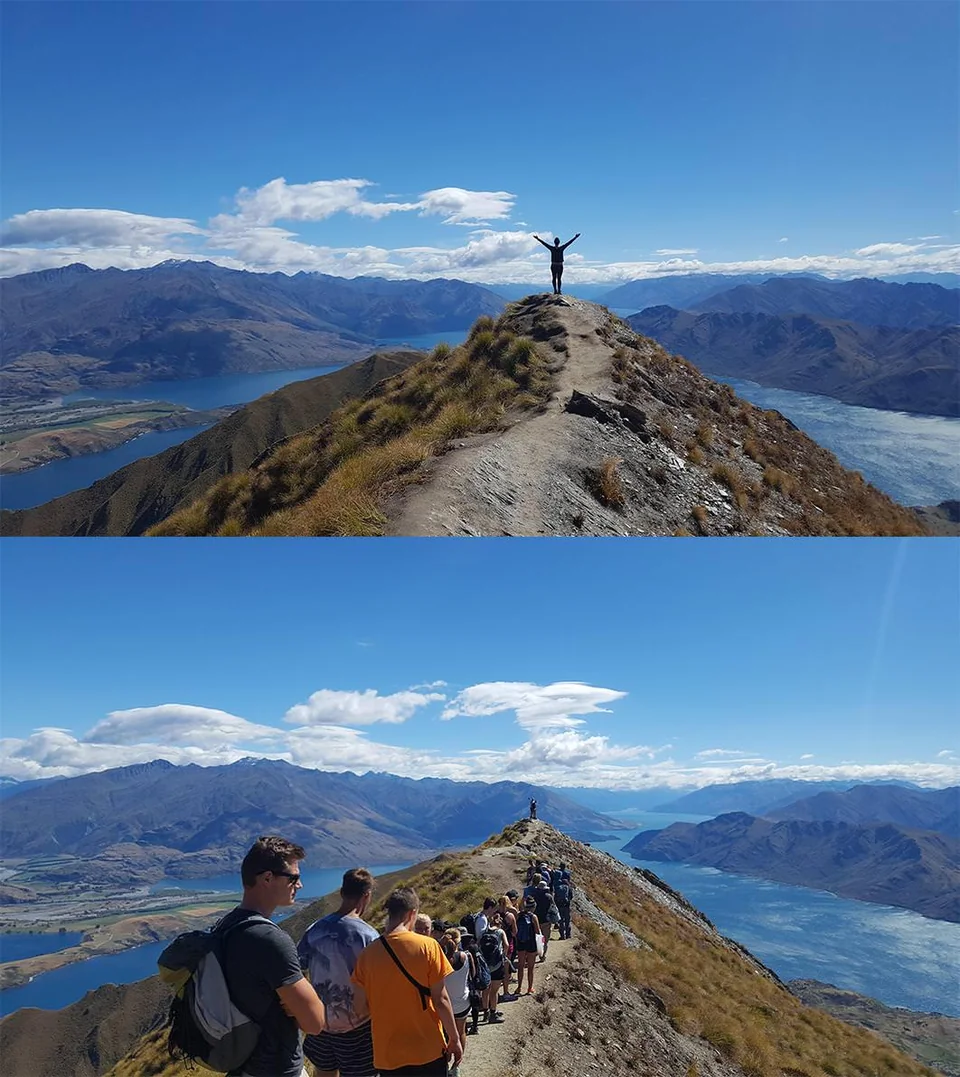
So as always… watch out for that.

Podcast – The Magnus Archives

The Magnus Archives is a supernatural horror fiction podcast that ran for 200 episodes across 5 seasons from 2016 to 2021.

I got into it essentially by the strength of the writing: I was at a craft fair and found a range of stickers with intriguing phrases like “The sky ate him” and “The world is always ending”.
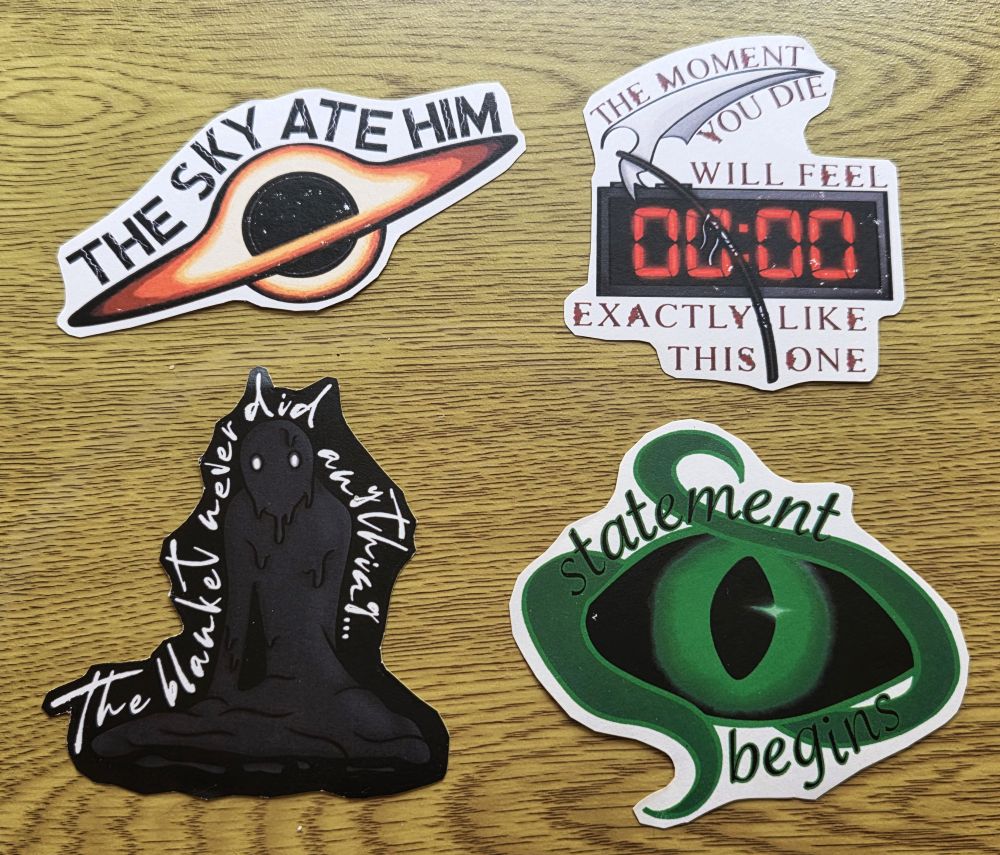
Unfortunately I didn’t note the artist and the work is not signed!

The framing premise is that the eponymous Magnus Archives takes statements from anyone that has experienced something supernatural, and the Head Archivist is recording these statements out loud to tape in order to log them. In this way it takes a classic “spook of the week” form.

I liked that a lot of the elements of the premise that don’t really make sense end up being narratively justified – with the exception of the very non-diegetic spooky music, which was still excellent (especially the “and then things got really spooky” musical cue in season 1).

The spook-of-the-week setup has two tightropes the author must walk, which author Jonathan Sims talks about explicitly in some of the Q&A episodes: the balance between the weekly spook and a greater narrative, and the balance between raising questions and and answering them. For me, neither one is walked perfectly throughout – but Sims (who is also the lead voice actor) does a much better job of both than I’ve seen before. Even though for me the series peaked around 75% of the way through, I still strongly recommend it if you like spooky business.

Some points to note before jumping in:

  • Episode 1 (styled MAG 1) did not do much for me, MAG 2 is a better bellwether for what the rest is like, so I recommend sampling at least up to that point
  • There is a dedicated subreddit, with a thread for each episode featuring discussion by fans and no spoilers about future content. This can be quite fun for a debrief and help spotting deeper connections between things. (Hub of most of these threads can be found here)
  • There is a dedicated wiki with plot summaries and full episode transcripts, but you need to be very careful because immediately after the plot summary you will see information that spoils future episodes
  • My very favourite bit begins with the word “Hello”. You’ll know it when you get there
  • My least favourite bit is recurring characters that are constantly angry and obstinate
  • Probably avoid if you’re averse to the “endless suffering” trope
  • There’s a follow-up called “The Magnus Protocol” which is still running and I have not yet sampled

The home page with various links is here, but it’s probably easiest to just search ‘magnus archives’ in the podcast service of your choice.

The Androids are Coming

Because I’ve been writing Things for almost 20 years, I can see how some of my posts serve as a marker of developing technology, or at least my awareness of it. For example, I posted in 2015 this Google Research post about neural networks generating images, which is I think the precursor to generative AI art as we now know it.

Back in 2009 I posted about Boston Dynamics’ ‘Big Dog’. Developments in robotics carried on, with bipedal models eventually roaming free of connecting cables and getting increasingly human-shaped. They now seem to be at something of a turning point.

Compare the performance of China’s androids in the 2025 new year show here:

… with the 2026 new year show:

My guess was that android promotional material would shy away from any implication of violence to avoid reminding people of films like Terminator. I hadn’t accounted for the fact that state propaganda might actively want to promote martial prowess, hence the above. At least we can look at what’s coming directly instead of guessing.

Terminator style threats to humanity are a natural fear but I suspect are a low-probability / high-impact event (perhaps more likely in the form of perfectly efficient and numerous state police facilitating a concentration of power into an ever smaller number of human hands, rather than a bona fide machine uprising). Warfare is also a sufficiently incentivised area that bespoke robots (rather than androids) are arising already, starting with drones.

We’ve spent centuries building specific machines to tackle specific tasks efficiently. Building an android to do similar things seems laughably inefficient – a sledgehammer to crack a nut, or supercomputer to play tic-tac-toe. But there is of course a massive efficiency: we have tools, workplaces and entire paradigms built around the human form-factor. Making an android to solve one physical task is inefficient; making one that can do any human task imaginable, with more accuracy / strength / reliability than a trained human, is incredibly efficient.

In December 2024, Citigroup published this forecast of robot numbers by type. Humanoid robots (which I’m referring to as androids) are the most notable leap, getting a foothold in 2030 before exploding by 20250:
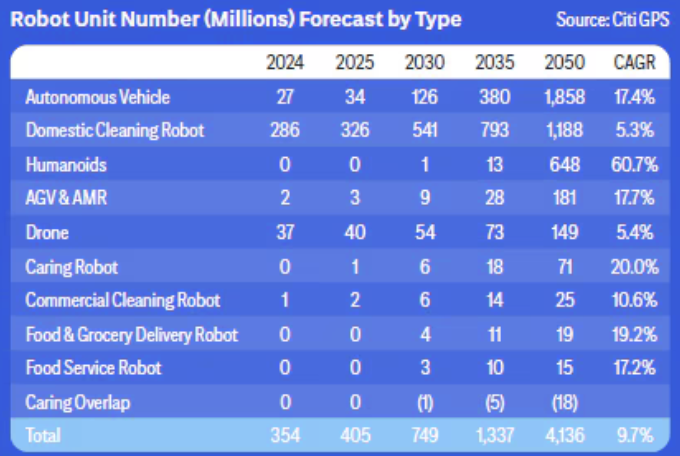
The leaps forward in AI, most notably visual processing, seem to have unlocked a major piece in this puzzle and make the above look more plausible to me. Here’s a couple more cases (like the Chinese New Year’s Show example above) that show the improvements in these models over recent years, and so gives an idea of the trajectory.

February 2025: Helix androids putting away shopping very slowly:

May 2026: Helix’s Figure 03 working a production line (and other things):

In a very direct test of a specific skill, there are contests in China in long-distance running for androids. In April 2025, one robot completed the half-marathon in 2 hours 40 minutes.

One year later, a robot completed the half-marathon in just over 50 minutes, beating the human record of 57 minutes (which immediately seems like a less relevant comparison).

I don’t expect this to be quick, so the slow initial commercial growth in the Citi forecast does look reasonable to me. I’m certain there will be massive bumps in the road as public perception and legal / insurance systems navigate around the inevitable accidents and abuses this technology will produce. But I now feel pretty confident that sci-fi visions of robot drivers, plant-pickers, and assistants are not at all fanciful.

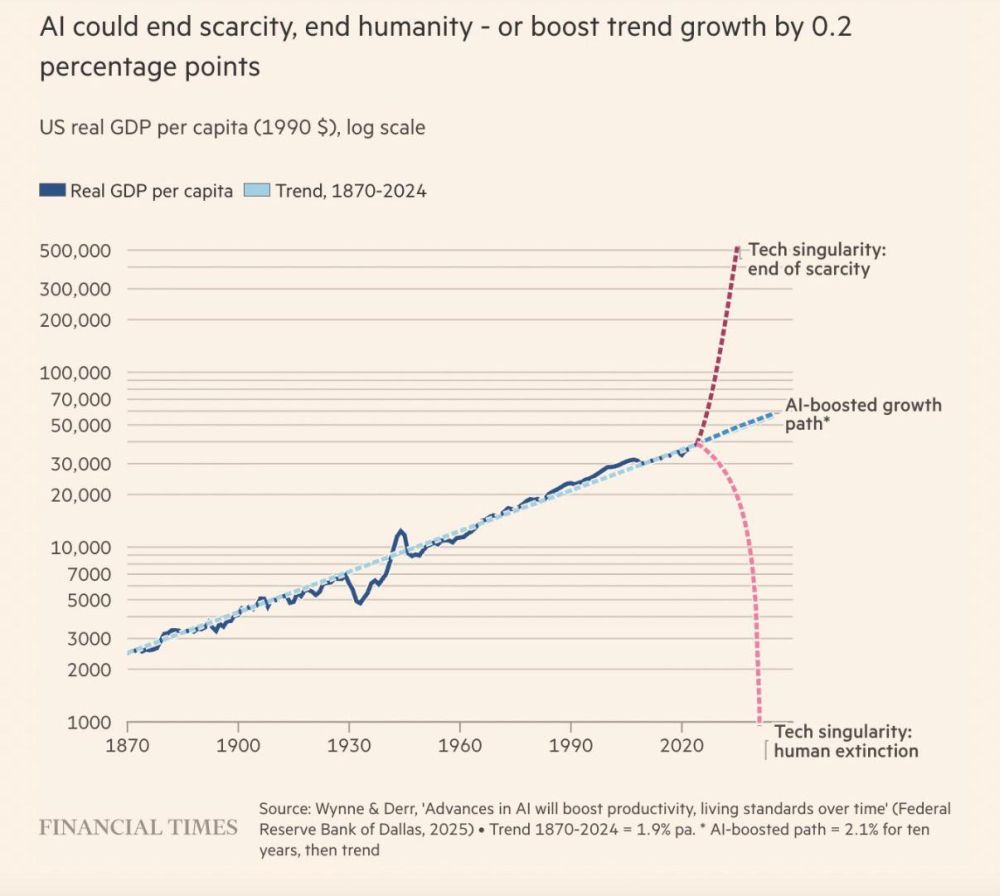
I’ve also been reading a lot about what people think will happen to the humans whose jobs have been replaced. To distil everything, the answer is that… the result will be a product of huge numbers of competing systems and feedback loops, and as such is impossible to predict. It’s a bit like this Financial Times prediction of GDP based on different AI scenarios, which is quite funny and frightening at the same time:
Music videos where effort is the trick

This Things is getting a bit heavy, so let’s look at some Music videos in which a beautiful visual effect is achieved, but the amount of effort that must have gone into it is tremendous.

Director: Michel Gondry
Artist: Kylie Minogue
Song: Come Into My World

Once again Gondry finds a way to visualise the repetition of the song in a video that just keeps getting more impressive:

How did he do it? Well, he explains it and the inspiration here

His explanation seems to take for granted an enormous amount of compositing work, all the more impressive given that this was in 2002 when computer-assisted tools were less well developed. That said, it’s Gondry – possibly he found an incredibly efficient way to do this that he’s not revealing here. Or he just takes that “enormous effort” part for granted because he does that regularly.

Director: Nick Goffey and Dominic Hawley
Artist: The Chemical Brothers (with vocals by Beck)
Song: Wide Open
Dancer: Sonoya Mizuno
Effects: The Mill

Starting with a close-up to assure you that you’re looking at a real human dancer, something impossible starts to happen. Make sure to stick around until 3:28 (or just skip there if you’re busy) in which the video casually does something even more impressive.

How did they do it? Surely to do that you would need some sort of motion-controlled camera or real-time movement tracking, re-render almost everything in CG and then carefully composite the live-action with the CG with pinpoint precision?! The answer is yes, that’s exactly what they did:

Director: Páraic Mc Gloughlin
Artist: Weval
Song: Someday

If you take carefully framed photos of everyday objects and architecture with repeating patterns and show them in sequence, you get a strange sort of stop-motion effect. I saw this trick first used in Michael Langan’s 3-minute video Dahlia (2008), then in Thomas Sauvin’s Recycled (2013) (seemingly no longer viewable but described here; a short snippet can be seen from 1’12” in this film festival trailer).  Páraic Mc Gloughlin pushes that idea even further with incredible smoothness, range and synaesthetic effect for Weval’s Someday (2019) music video (after about 21 seconds of build-up):

If you enjoyed that you could also try the video for IMANU – A Taste of Hope (Hallowvale) by Chris Takács and Kevin Rogerson; or enjoy spacelike slicing instead of timelike with the video for Max Cooper – Repetition by Kevin McGloughlin.

The AI Shovelware is here

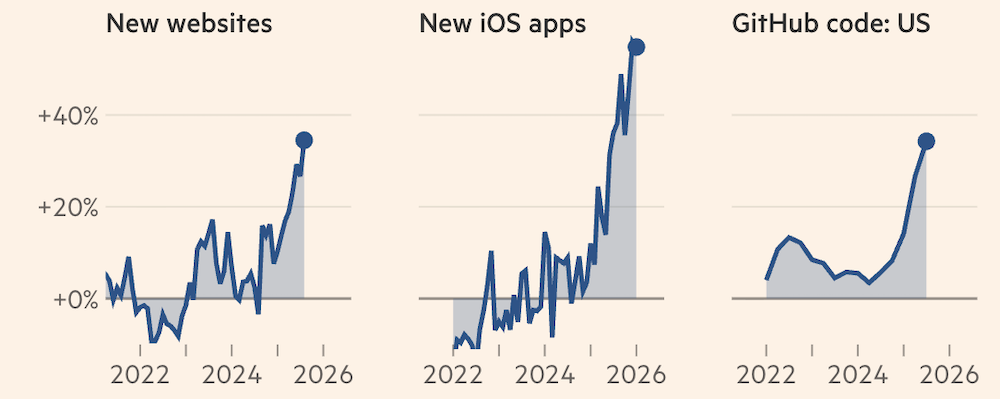
Also in the category of marking developing technology, last time I wrote about the AI ‘trough of disillusionment’ referencing Mike Judge’s “Where’s the shovelware” article.

Well, true to how the Gartner hype cycle (sometimes) pans out, it turns out we were coming out of that trough.

The financial times looked back into those same trends (paywalled link) in February 2026 and found recent upticks in websites, iOS apps and GitHub repositories:
In April 2026, Naavik did a detailed overview of the topic just for games, showing not much effect on PC (although a rise in AI-discosed games), but a huge effect on mobile (especially on Android), showing the number of publishers is up, and the relative proportions of success have remained about the same.

That last point is particularly interesting because the feeling in games is that there are already way more games than the market can sustain (so the vast majority do essentially no business), so an AI-driven surge in new games could just dilute success and make it even harder for anyone to succeed at making games. The counter-argument would be that with a wider range of games, more niches are filled, so more people buy more games – for example, maybe I buy 6 games a year, but if there were twice as many that were twice as appealing to me maybe I would buy 9. If, as Naavik found, the relative proportions of success are about the same then these two effects perhaps cancel out. Or realistically, there’s lots of other effects and that data isn’t sensitive enough to detect them or their true net effect, and also not enough time has elapsed to feel the effects, so let’s just wait and see.

Still this does put more pressure on the question of ‘discovery’ – I can’t buy those amazing games if I don’t know they exist. Most people who work in video games seem to want discovery to get solved through some clever platform design, but I don’t think that’s very likely:

  • If I knew what I wanted and could find games that meet exactly that, just maybe we could solve it, but people do not know what they want! I would never have searched for something like Outer Wilds or Portal – in fact if I had searched for either of those accurately it would have effectively spoiled the game – but they were exactly what I wanted.
  • This type of problem is approximately solved in social media, where algorithms can serve content people are likely to enjoy (well enough that they keep scrolling, anyway) – but I don’t think people play enough games for you to run the kind of predictive models that work there
  • It might just about work if you took as input everything about you (social media consumption, books read, films watched etc on top of games played), but nobody holds all that data (yet)… and we feel uncomfortable with anyone holding all that data.

So in the absence of all that, we just get marketing.

Or some sort of procedural AI-generated game starts out as what you thought you wanted and evolves into what you actually needed based on your real-time reactions. That sounds a lot like a dream, or perhaps a nightmare, both figuratively and literally.

Perhaps more likely, in the future maybe your household android tracks all of that contextual data about you locally, and can then make perfect recommendations?

  • Transmission ends, stretching for a note of optimism

Categories
New

Things 2024 Q2: Project Lyra, Baseline Scene, Singularity

Correspondence on dancing and music in movies

Last time I spoke about temp tracks, and the use of an end-of-film dance sequence as a nuanced way to wrap up a narrative.

Tarim points out that Edgar Wright’s Baby Driver (2017) is an excellent contrast to a temp track, in that it has many sequences precisely written, choreographed and edited with a very particular song in mind. I had hoped to see this catch on as a trend but have so far been disappointed, so do let me know of anything similar I missed.

Miranda pointed out that in video games, Frog Detective also features the Dance Party Ending trope, which makes me want to play it even more.

Finally Ben notes that Der Hauptmann / The Captain (2017) does something at the end that is not dancing but is nonetheless unexpected and produces an interesting overall effect. I’ve not seen it yet but that does sound pretty intriguing.

Real-world puzzle: Frit

In Things June 2022 I invited you to consider “How do rice cookers work?” as a sort of real-world puzzle one could solve just by thinking about it.

Similarly, frit is the name for the black spotted band you see around the edges of car windscreens or train windows. But why is it there and why does it look like that?

As a clue on how deep to go, from what I have now read there are three parts to the answer, all of which I think you could work out just by thinking about it – if you have enough background knowledge of how the science of this sort of thing works.

Chasing ‘Oumuamua

In 2017, an unusual celestial object (NASA description), uniquely cigar-shaped, was observed rapidly entering the solar system before being slungshot (at 87.3 km/s) by the Sun in a different direction, in what looked like an Oberth maneuver – and even sped up slightly as it left! Tantalisingly, and if you are prepared to get tremendously speculative, this is just the sort of thing you might expect an object created by a Non-Human-Intelligence to look like and do. But it was travelling far too fast for us to stand a chance of sending anything out to take a closer look at it.

Or was it? Project Lyra explores the possibility of finding some kind of trajectory through the solar system that could catch up to it, and impressively actually found a way. Launching a craft in 2030 and pivoting it around Jupiter to launch into its own Oberth maneuver around the sun and catch up with ‘Oumuamua by 2053 – albeit passing it at a relative speed of around 26km/s. It’s not clear if we can build a craft that can actually achieve such a feat, let alone muster the ability to fund it, but it’s a pretty fascinating possibility.

A nice animation of this path can be found with this twitter/X post. If you don’t have an account you can try this YouTube video which edits it to Lynyrd Skynyrd’s Free Bird to greater/lesser effect.

This great astronomy.com article goes into detail about possible explanations for the object (even that acceleration), and multiple methods being investigated to get a closer look at it.

One of my favourite parts was a note on the scale of distances involved. One Astronomical Unit (AU) is the average distance from Earth to the Sun. Travelling at such an incredible speed, in one hundred years ‘Oumuamua will be about 150 AU away from us. In comparison, Proxima Centauri, the closest star to the Sun, is more than 268,000 AU away. While I already understood that interstellar distances are very very large, this helped me put it in better context.

Video round-up

If you’ve not seen her before, Diane Morgan’s fictional character Philomena Cunk is an “ill-informed investigative reporter”, interviewing subject-matter experts and opining on various matters with a playfully unhinged level of naivety, weaving a kind of verbal slapstick with sudden darts of dark satire (sample quote interviewing a professor of imperial history: “Was the British Empire evil like it was in Star Wars?”)

The approach is very silly and sometimes effective, but the stand-out moment for me is her interview on the topic of nuclear weapons, which possibly only lands if you’ve seen her other stuff:

https://www.youtube.com/watch?v=DGrLUNpF7H4

Last time, I wrote about LCD Soundsytem’s “New Body Rhumba”, after which YouTube convinced me to watch some of their other music videos. An excellent highlight of this back-catalogue is the video for Oh Baby, directed by Rian Johnson and telling a short story that I think would be of interest to Things Readers. (Do note that the music and video both take 35 seconds to really kick off):

When I was a kid I said my favourite TV show was the adverts. Perhaps this was a golden age of the form, or perhaps kids just love short-form video wherever they can get it, but in any case one of my favourites was Cog – I literally have it on DVD! So I was very happy to find this behind-the-scenes video about how it was made:

Recommended Media

Spy x Family

As an anime on Netflix, this is notable for being both interesting and comparatively available even to people who don’t usually watch anime. It’s best thought of as a sit-com with a very silly ‘sit’: in an incongruously average Western setting (German style place names, European architecture, English character names, American school buses, vaguely cold war era), a fake family is formed where none of the participants know about the secret lives of the others. Watch the first two episodes to see how this pleasingly mad premise comes about and judge if this kind of silliness is for you!

Delicious in Dungeon

Another anime on Netflix that might appeal to people who don’t usually watch anime! This one is a bit of a wolf-in-sheep’s-clothing. It initially appears to be about a D&D-style dungeon crawl with a surprising fixation on recipes you could make with the monsters killed along the way – like a fantasy-themed cooking show.

After a while though it reveals writer Ryoko Kui’s passion for thoughtfiul world-building with an emphasis on systems-thinking, with the party’s success coming from knowledge and curiosity. It also does get quite dark and violent. You probably need to watch at least 5 episodes to see if you’ll enjoy what it has to offer, but for me the journey was definitely worth it. Also do note that the primary female character becomes much less two-dimensional and sidelined over time, as I found this aspect was quite off-putting in the early episodes.

Riddle of Fire

Just reading the premise on the cinema listing got me interested:

“In the rolling hills of Wyoming, three mischievous children are tasked with collecting a blueberry pie from their local store. However, what begins as a simple errand soon evolves into an odyssey across the American West, as the intrepid trio faces poachers, witches, huntsmen, and fairies, who all seek to challenge them on their quest. Will the bonds of friendship prove strong enough to guide them home?”

This very consciously evokes 70’s live-action Disney, with the film aesthetic, the haircuts and even the casting. I was a bit surprised to realise early on that these kids really can’t act (or possibly are being directed that way), but I took it as part of the Lo-fi approach, and ended up spending most of the film with a big smile on my face.

The trailer does a good job of representing it from the very first seconds, this is pretty much what you get:

Blade Runner 2049: subtext and metatext of the baseline scene (no spoilers)

I found Denis Villeneuve’s Blade Runner sequel cinematically striking, but was quite put off by the script’s underlying preoccupation with the elimination of every commonly recognised contribution of women to society (made no less problematic by the suspicion that this wasn’t even intentional). As such I can’t recommend it, even though I do like what the overarching narrative is going for.

Still, I have to respect the ‘baseline scene’, an update and reframing of the original Blade Runner’s Voight-Kampf test, as something strange and mysteriously compelling. This long essay by andi goes into that in a lot of detail, and is worth reading because it justifiably concludes with this excellent remark:

“At this point the text, subtext, and metatext all converge.”

If you know of anything else in any other media that can be described similarly please let me know!

https://cohost.org/mcc/post/178201-the-baseline-scene

Oral History of Lilo & Stitch

If you don’t want to read a long article about depressing sci-fi, how about one about uplifting animation?

A recent rewatch confirmed that Lilo & Stitch is my favourite movie of all time (closely followed by Kiki’s Delivery Service and Speed Racer). It also has one of the best behind-the-scenes content I’ve ever seen on a DVD in the form of a 2-hour making-of documentary that covers all the aspects of film-making I’m most interested in – especially the iterative writing process and the way in which a singular creative vision is realised with a large team.

This makes it all the more impressive that Vulture’s ‘oral history’ finds even more fascinating information about the making of this film. With some very candid interviews with key players, it puts the film in the proper context of this somewhat wobbly era of Disney animation. It’s also a great case study for giving creative works a certain amount of independence from outside interference, and the benefits of avoiding crunch:

https://www.vulture.com/2022/10/an-oral-history-of-lilo-and-stitch-a-hand-drawn-miracle.html

If you like that, even if you haven’t seen the film you might also appreciate their oral history of the Emperor’s New Groove, which is much more of a roller-coaster when it comes to the evolution of the story.

Quote

“Change? Why do we need change? Aren’t things bad enough as they are?” 

Attributed to Lord Salisbury

Why I love the ‘Singularity’ music video

As part of an attempt to add some positivity to the internet, I previously wrote about why I love the ‘Up All Night’ music video.

While there is less to unpack, allow me to present the Jon Hopkins Singularity music video, directed by Seb Edwards. First watch it here, and note that while pondering a metaphorical reading of the action is quite interesting, I am – unusually – much more drawn to trying to interpret it literally:

As with Up All Night, I’ll use the performers’ names for the unnamed leads: Jarkko and Aliashka (source). By the way, if this doesn’t really interest you then feel free to move on as this is the final Thing of the issue!

Your mileage may vary, but the opening worked perfectly for me: all I could see was something incomprehensible and spooky in a forest, and was only able to interpret the imagery when it then recurs towards the end of the video.

We begin in an ambiguous and dystopian-looking setting (actually Belgrade according to this, looks like Block 61 on Google maps) as Jarkko comes home to discover Aliashka mysteriously floating and spinning down from the sky. Immediately we are challenged to interpret what could be going on.

My read is that they do not know one another, but they are curious about each others’ circumstances, and there’s a spark of attraction. The presence of flashing lights and drifting down from the sky immediately suggests something extra-terrestrial, but the amorous developments and eventual arboreal destination suggest to me Aliashka is some kind of fae spirit entering the human realm for the first time.

The next challenge to a literal interpretation is the movement: actions and reactions are almost normal but have a supernatural grace. Jarkko looks confused about this, not sure if he needs to help or evade, and Aliashka seems mostly interested in how he is reacting. My read here is that in a magical exaggeration of the human instinct to read social cues and mirror behaviour, Aliashka’s fae nature ensnares Jarkko, who can’t help but fall into her patterns of movement a little – and later on, a lot.

Ambiguous behaviour reads as threatening, and for a few shots it seems like Jarkko is cautiously backing away but not entering full flight. Aliashka closes the gap, becoming more interested in him – especially as his movements become more dance-like and fluid. I read this as Jarkko beginning to pass some sort of compatibility test.

A sequence of throws might be Jarkko trying to push Aliashka away, but each one turns into more of a dance, and he becomes more enamoured – now no longer backing away, he chooses to follow her up some stairs with her smiling encouragement.

Moving into an embrace that might usually escalate to a kiss, it seems they have both concluded that they have found a romantic partner. But as the music shifts, so does Aliashka’s demeanour. She starts to look frustrated and even sad. This is because despite confirming a baseline compatibility and attraction, she must now submit Jarkko to a more severe process to progress their courtship.

To Jarkko’s bafflement, her movements now shift decisively from ambiguous to physical attacks and throws. He can’t match her supernatural strength, although he can perhaps endure it.

When thrown through the floor, he tries to stand but can’t – not because he is weakened, but because his body is now fully caught up in the rhythm and spin.

In an almost miss-able moment, standing apart, Aliashka hunches and moves her arms – and Jarkko mirrors the movement, or tries to.

He’s not actually being attacked: this is part of the process by which he is brought into sync with the fae. Her attacks change to patterns for him to copy, or encouragement for him to keep going. Her movements become wilder and more desperate as she puts energy into the process, willing him to survive and complete the process of assimilation.

They finally rise and hold one another, locking eye contact, touching heads. Jarkko understands that this was never an attack, but something more like a bonding ritual and a lesson. They bounce in sync and he finally reaches her level – the ability to spin and float! It’s ridiculous and beautiful and represents a sublime level of compatibility.

They drift out of the urban environment and into the woods – her realm, I think. There they finally stop and share a moment, both relieved and cautiously optimistic about where this might go next.

Or, you know, perhaps it’s just a metaphor for a relationship that breaks down and then heals again. But that’s not as interesting.

  • Transmission ends
Categories
New

Things September 2017 – Roads, Fish, DJ Shadow

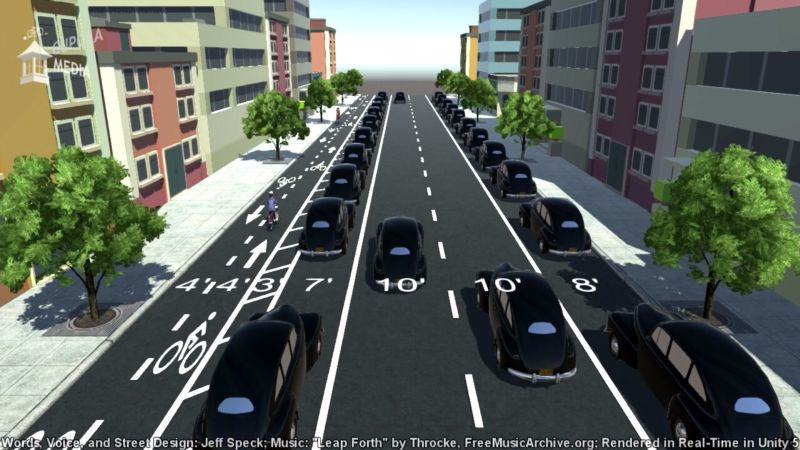
Road Diet

If expanding or adding roads induces more people to drive and so creates worse overall flow, does it follow that reducing or removing roads could improve it? In some cases, yes. (Incidentally, that’s on Kottke.org, which you should definitely follow if you like Things, since it’s the same sort of idea but better).

Up All Night

Beck’s recent music video directed by Canada reminds me of what was (for me) the golden age of music videos, with a simple conceit, intriguing editing and strong visual metaphor, all well executed. I also like the way the choice of frame for the video thumbnail sets expectations:

If you want to know about Numbers

Via Clare, there is a Wikipedia article for the number 1001, which is nice, but does raise certain questions. Fortunately, some of those questions can be answered in the ambitiously-titled article List of Numbers.

Death and Social Media

As Facebook continues to execute its global man-in-the-middle manipulation/monetisation of social interaction, it unsurprisingly runs into some very difficult territory. Reading their blog series on these topics, I’m actually quite impressed with their approach to social media mortality, and was very interested to read how they balance their policy on hate speech.

Generic Film Trailer

With Inception’s percussive brass sound slotting in alongside plenty of other tropes, witness a surprisingly compelling and fully generic trailer:

Would you Rather be a Fish?

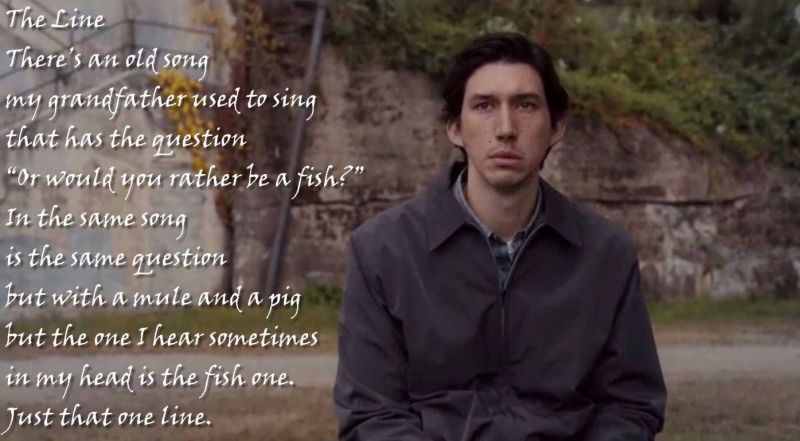
Laurie Anderson’s song “Monkey’s Paw” has plenty of strange memorable phrases, but one stayed with me over the years: “Would you like to be… a fish?” The video embedded below is edited from relevant shots from the Terminator TV series, so don’t watch if you’re averse to cyborg gore:

In Jim Jarmusch’s Paterson (2016), the strange power of the phrase is explicitly noted in a poem:

… except of course he was referencing the song “Swinging on a Star”, which I assume first coined the phrase:

https://www.youtube.com/watch?v=9CDs067081E

I rather like the idea that much as I was struck by Anderson’s aquatic question, she herself must have been similarly struck by it in Swinging on a Star, as were Jim Jarmusch (writer-director of Paterson) and/or Ron Padgett (poet for the film). All of which makes it all the more tragic that (via Clare) the opening of late 80’s kids series Out of This World reworked the lyrics to “Swinging on a Star” to present the dilemma of aliens choosing to live as humans on earth, but singularly failed to suggest the fish alternative.

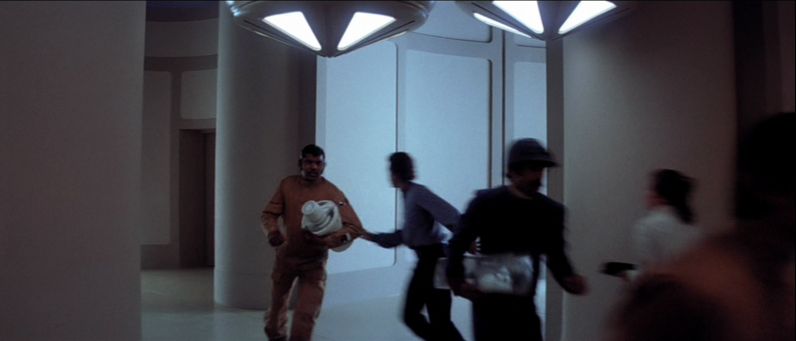
What is it that makes a short phrase like this stand out? I’m reminded of Admiral Ackbar observing “It’s a trap!’ in Return of the Jedi, a far more banal turn of phrase which nonetheless gathered enough pop culture awareness that you can make a comic like this, and people will track down the original voice actor and get him to deliver the line eight different ways 33 years later and get 36,000 YouTube views as a result.

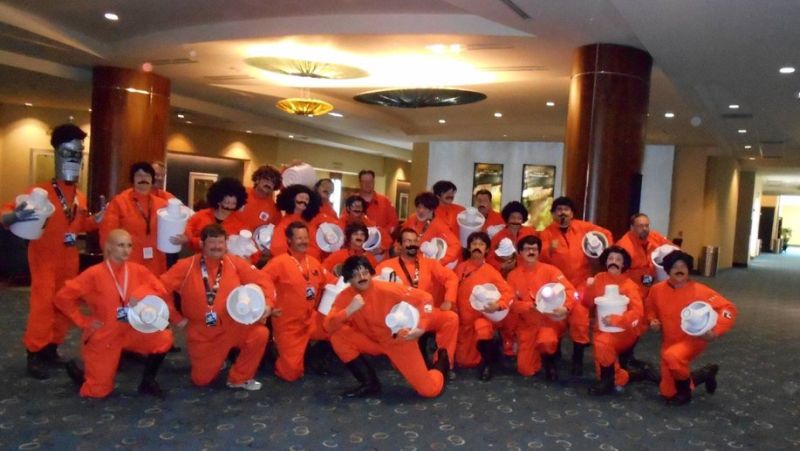
Mind you, Star Wars is the kind of overblown phenomenon that has entire phalanxes of fans dress like an obscure background character who happened to be carrying an odd-looking prop, so may not be the most reliable of reference points.

Find, Share, Rewind

DJ Shadow goes long on both the ‘D’ and ‘J’ elements, shooting to fame in 1996 with his debut album Endtroducing, possibly the first album composed entirely from samples, which he drew from his extensive and ever-growing vinyl collection. If you’re not familiar, the result is a lot more interesting than one might suppose.

DJ Shadow in his natural habitat

More than most artists, while he moves on musically, much of his fan base clings to the past. In a moment I expect is repeated often, at his recent gig in Brighton when he announced he would play “some old stuff and some new stuff” a member of the crowd shouted “No! Artistic stasis or death!”

Kind of. I mean, they actually just shouted “Old stuff!” but we all knew what they meant.

Anyway, the reason I bring up DJ Shadow is that he has (had?) a monthly 2-hour slot on KCRW to present some of his favourite music, and if you enjoy best-radio-station-in-the-world Fip, you might also like this, as it is similarly diverse and intriguing. There are four episodes up so you have an interesting eight hours ahead of you, if you choose to brave that path. Admittedly it starts at the less accessible end, but skip ahead in 15 minute increments for each major section if industrial electronic drone isn’t for you and you’d rather get to the Jefferson Airplane section.

Prince of Darkness (1987)

Things trivia postscript
Endtroducing’s brief ‘Transmission’ tracks (“You are receiving this broadcast as a dream”) – which I later found are sampled from the film Prince of Darkness (1987), a horror film just as mysterious and unnerving as the samples imply – are the reason I end Things posts like this:

– Transmission ends

Categories
Old

Things 57: Webcam-split-screen, Freaks and Potatoes

(Originally sent September 2009)

Forthcoming film
“Surrogates” is due to be released in the UK on the 25th of September. An adaptation of a graphic novel, it looks to be a solid Sci-Fi in what I consider to be the technically correct sense: positing a potential technological development, the story investigates what might happen in a society where such a thing is possible.

In this case the development is ‘surrogates’ – robot avatars that people control remotely, an idea just nicely at the edge of conceivable possibility.

I think the trailer gives too much away, so if you want to see the basic premise just watch the first 60 seconds, and I strongly recommend not watching beyond 1 minute and 30 seconds (seriously!) if you can possibly resist it!

http://www.youtube.com/watch?v=L7NWdxFAHdY

Video
I saw a video pair on YouTubeDoubler (here – pause the left video until the right one tells you to start it) in which two people use two webcams together to create a video for a duet, and I thought “Good, but could do better”. Someone did:

(Starts to get clever at 40”, goes nuts at around 3’10”)

Quote
Webcomic ‘Pictures for Sad Children’ suggests an improvement (site was taken down in 2014 – T.M. 17/5/22) on the ever-unsubstantiated ‘never more than 3 meters from a rat’ saying:

“We’re in earshot of two terrible things at all times”

Link
“Freaks survive because they are strange” – a great headline, a slightly silly experiment involving food-bearing model salamanders, and a plausible-sounding partial answer to the ‘maintenance of variation’ problem with evolution.

Potato Puzzle
You have 100 kilograms of potatoes that are 99% water by weight. You store them in a cupboard, and when you test them again a week later you discover they are now 98% water by weight. How much do the potatoes weigh?

Magical Ground Squirrel Puzzle Answer:
If the magical ground squirrel is able to position the bridges (say) East-West with such accuracy that an imp wanting to go North could not work out which one pointed slightly more Northerly and so had to choose randomly, then the squirrel has good odds of working out the result of the election by doing exactly that and leaving the bridges there the entire time.

If the imps are headed to the good training centres in the East and West, there will be no random choice made by them and when they have all come out 500 will have gone East and 500 West.

However, if the imps want to go to the evil training centres in the North and West, they will be choosing a bridge randomly. In that case, there is (by my calculation) only about a 2.5% chance that exactly 500 will choose each bridge. There’s a 97.5% chance more will go one way than the other, and in this case you could be sure they were evil.