Categories
New

Things 2026 Q2: Fisherian runaway, Androids, effortful music videos

Quotes

Here’s some nice quotes that all draw out aspects of the Dunning-Kruger bias:

Idealism increases in direct proportion to one’s distance from the problem

– John Galsworthy

Ignorance more frequently begets confidence than does knowledge

– Charles Darwin

Everything looks simple when you don’t know the first thing about it

– Kevin Williamson

Having established that, I now return to confidently holding forth on things I’m not an expert in, probably annoying Darwin in particular. I leave you to judge how sensible that is.

Super-normal stimuli and Fisherian runaway

Bear with me on this one as I invoke the principles of sexual selection to explain burgers that are too tall to bite.

Part 1: Gestalt Perception

Perception usually feels effortless, but the process that makes it work is strange and subtle. Dozens of contextual clues (sight/sound/smell, movement/light/texture, size/silhouette/colour, and many more) are all subconsciously processed, usually based on previously observed patterns, and our conscious attention is directed to whatever that process deems the most salient aspect. For example, you might see a poster you’ve never seen before, but it has a picture of an actor you know, some words in an elaborate font, a release date and some small print, and without effort you recognise it as a film poster, as well as a good guess for the genre and if it’s likely to be worth paying more attention to.

The way many parts contribute subconsciously to our overall perception is summed up by the slang term ‘vibes’, but over the decades other terms have approximated this idea – ‘vibrations’ of course, but also in different contexts bag, energy, flavour, and more recently aura or “x-coded” (for something with various signifiers of x). Similarly people say an idea ‘doesn’t pass the sniff test’, not because they can smell abstract concepts, but because of how it comes across in almost every other way.

Part 2: Supernormal stimulus

Certain aspects of perception have clear dimensions to them. Most obviously things like bigger/taller/longer but also brighter/more-textured/more-saturated, and beyond. If we recognise an object based on it being notable in some dimension, an object with a stronger version of that attribute can register more quickly and more strongly as a signifier of that object. Further, I think that obviousness biases us to rate it as a ‘better’ example of that object in some way. If it has an unnaturally pronounced example of that attribute it can become a supernormal stimulus.

Wikipedia gathers some examples from the natural world here, for example:

  • Birds will nurture fake eggs over their own if they are larger or more saturated (and Cuckoos exploit this fact)
  • Butterflies that select mates by bright colour markings will prefer orange paper model butterflies over receptive real mates
  • Herring gull chicks seeking a parental beak for food will choose a red stick with yellow markings over a faithfully reproduced yellow-beak-with-red-dot replica gull head

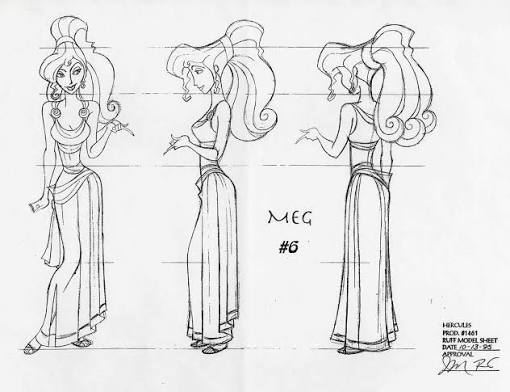
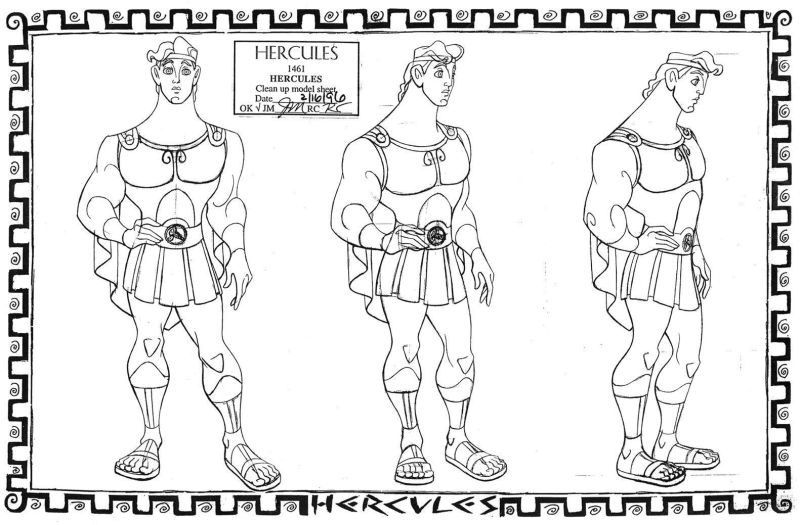
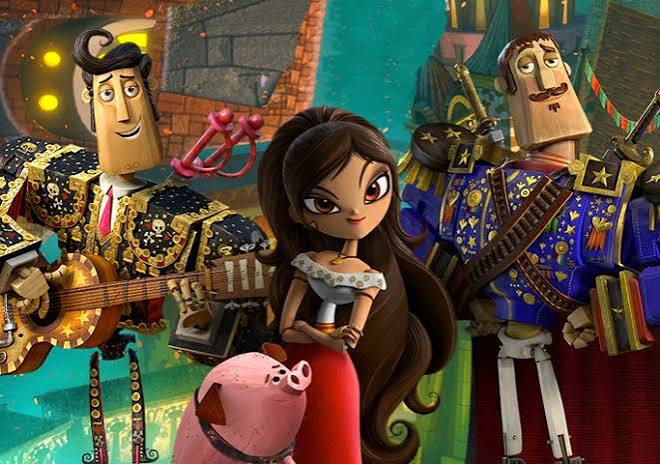
Of course, we can intuitively understand this without tricking small animals in laboratory settings, because we are animals ourselves. For example, a drawing of a woman with a dramatically high hip/waist ratio or a man with an implausibly pronounced shoulder/waist ratio will read as stronger and more obvious examples of each sex, even if those ratios go beyond what nature would naturally produce. Some examples:

Designs from Disney’s Hercules (1997) – exaggerated but legible:
Designs from The Book of Life (2014) – frighteningly extreme, still works:
Beyond human secondary sexual characteristics, we can experience it in pretty much everything. A giraffe with an extra long neck is extra giraffe-ey; a stretched limo is an even greater affluence signifier than a regular limo; a monster with an excessive number of impractically long and excessively sharp teeth is extra monstery.

Part 3: Fisherian runaway / Sensory Exploitation Hypothesis

Natural Selection just by itself is an incredibly powerful theory, but some things defy it – a classic example being peacock’s wildly impractical tails. Less often remembered is that Darwin also theorised about Sexual Selection: genes that produce traits that elicit sexual preference will have a reproductive advantage, even if they have no survival advantage. But this on its own doesn’t explain the peacock.

Fisher’s suggestion was that the earliest version of the ‘ornament’ (the surprising feature the species developed) initially signalled greater potential fitness in the natural-selection sense, which meant a preference for that ornament also had an advantage. If the ornament and the preference are correlated (I assume mainly because genes for both get passed on together) you can enter a feedback loop of ever-more exaggerated ornaments that are just barely constrained by natural selection.

The ‘sensory exploitation hypothesis’ proposes that preference for exaggerated traits arises from sensory biases such as the supernormal stimuli I mentioned above. It seems pretty intuitive to me that this will help drive the Fisherian runaway effect far beyond what natural selection would usually tolerate. It’s a bit like Goodhart’s law – when a measure becomes a target, it ceases to be a good measure.

So a male peacock with an even bigger, brighter, more saturated and more ornamented tail will look even more appealing to a female peacock, and both the tail and the appreciation for the tail get passed on. Thus the tail becomes ever more extreme, until it finally bumps against natural selection’s hard limits.

No points are awarded for this, but I did come up with the sensory exploitation hypothesis myself! Only after looking for research did I learn that all the above is well-established, and that point about ornament and preference being correlated is the deeper insight.

Part 4: Fisherian runaway in capitalism

I do think this same process applies to capitalism:

  • Consumers select products by their utility. Products with greater utility are more selected, more successful, and so are produced more. Natural selection at work. A Drosselmeyer nutcracker is incredibly good at cracking nuts, so it does well in objective comparisons, and people like me will recommend it to anyone that wants to crack nuts.
  • In many cases the consumer can’t perfectly assess the utility of the product before purchase, so they rely on other signals. This becomes more like sexual selection.
  • We can fall victim to a super-normal stimulus here – a thing that depicts outrageously exaggerated traits looks more appealing, even if it’s beyond all reason. A 13-in-1 tool must be better than a 3-in-1 tool. Drinking Tango gets you slapped by an orange man. This car looks so good, fireflies follow it. These two people love this product, and they are very attractive!
  • Then the Fisherian runaway can start – to compete, those products need to show the super-normal stimulus, and then the only way to stand out is to exaggerate it even further until you eventually run aground on actual utility / natural selection.

Perhaps you think I’m mad, but remember the burgers?

As a food, a burger is notable for being quite tall – it’s a stack of three (or more) things. A burger can also seem more appealing if it has more than just a plain burger inside. So what happens? Burgers that are taller and have more additional things inside look like even better burgers. Before you know it, restaurants are serving burgers that have to be held together with a skewer and cannot even fit in a conventional human mouth. It’s like eating a peacock’s tail. Metaphorically.

(I’m not sure about the correlation element… perhaps it comes in when chefs eat a taller burger at some other restaurant and conclude they should make their own burgers even taller?)

What about cars? Some people feel safer or more masculine if their car is bigger than others. In America where petrol is relatively cheap (so the natural selection pressure of miles-per-gallon is lower), this effect has reached peacock tail levels of madness as cars become ever larger. The correlation kind-of happens here because obtaining a bigger car means other people, whose cars seemed sufficiently big before, now see a need to get even bigger ones.

Thanks to Instagram and similar social media, we get a similar effect for a bunch of things:

  • Treats/drinks that look amazing go viral and drive more sales (and more social posts, driving the correlation) than those that actually taste good
  • Holiday destinations that make for good photo opportunities start to do better than those that are actually enjoyable
  • Getting more abstract: a video/post that has a very high number of views seems like it must be more worthy of our attention
  • Bit of a stretch: a famous person having an opinion seems more compelling than an expert in that domain’s opinion

So as always… watch out for that.

Podcast – The Magnus Archives

The Magnus Archives is a supernatural horror fiction podcast that ran for 200 episodes across 5 seasons from 2016 to 2021.

I got into it essentially by the strength of the writing: I was at a craft fair and found a range of stickers with intriguing phrases like “The sky ate him” and “The world is always ending”.
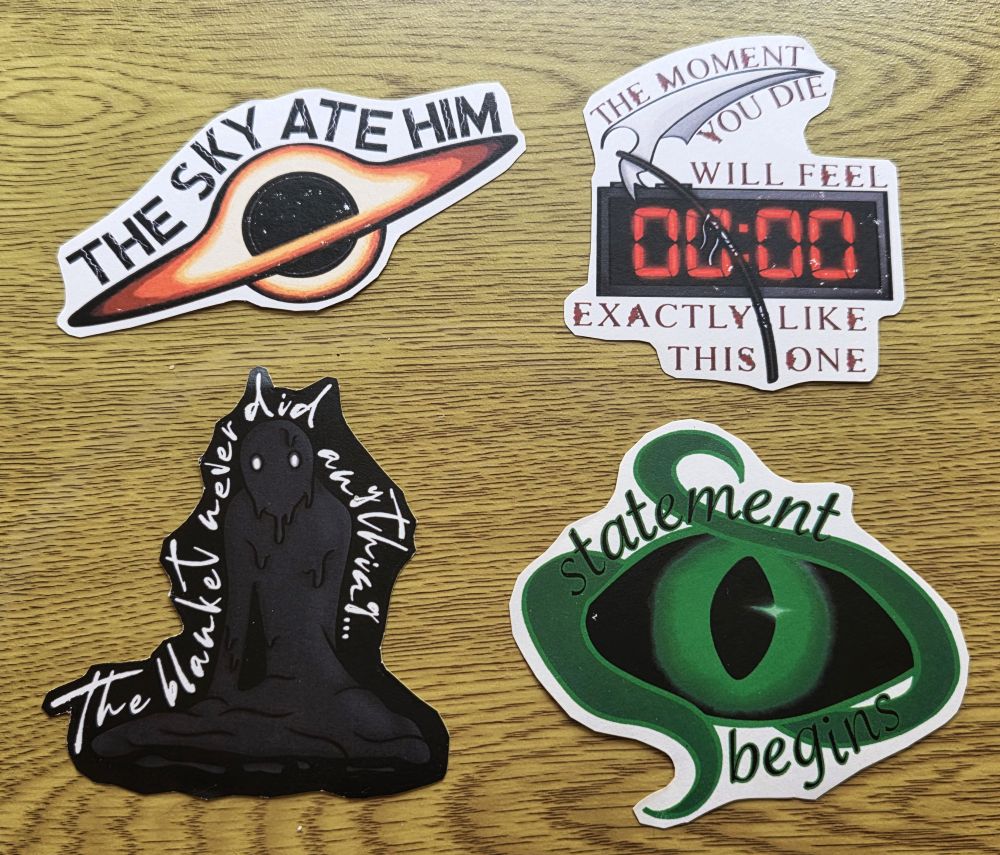
Unfortunately I didn’t note the artist and the work is not signed!

The framing premise is that the eponymous Magnus Archives takes statements from anyone that has experienced something supernatural, and the Head Archivist is recording these statements out loud to tape in order to log them. In this way it takes a classic “spook of the week” form.

I liked that a lot of the elements of the premise that don’t really make sense end up being narratively justified – with the exception of the very non-diegetic spooky music, which was still excellent (especially the “and then things got really spooky” musical cue in season 1).

The spook-of-the-week setup has two tightropes the author must walk, which author Jonathan Sims talks about explicitly in some of the Q&A episodes: the balance between the weekly spook and a greater narrative, and the balance between raising questions and and answering them. For me, neither one is walked perfectly throughout – but Sims (who is also the lead voice actor) does a much better job of both than I’ve seen before. Even though for me the series peaked around 75% of the way through, I still strongly recommend it if you like spooky business.

Some points to note before jumping in:

  • Episode 1 (styled MAG 1) did not do much for me, MAG 2 is a better bellwether for what the rest is like, so I recommend sampling at least up to that point
  • There is a dedicated subreddit, with a thread for each episode featuring discussion by fans and no spoilers about future content. This can be quite fun for a debrief and help spotting deeper connections between things. (Hub of most of these threads can be found here)
  • There is a dedicated wiki with plot summaries and full episode transcripts, but you need to be very careful because immediately after the plot summary you will see information that spoils future episodes
  • My very favourite bit begins with the word “Hello”. You’ll know it when you get there
  • My least favourite bit is recurring characters that are constantly angry and obstinate
  • Probably avoid if you’re averse to the “endless suffering” trope
  • There’s a follow-up called “The Magnus Protocol” which is still running and I have not yet sampled

The home page with various links is here, but it’s probably easiest to just search ‘magnus archives’ in the podcast service of your choice.

The Androids are Coming

Because I’ve been writing Things for almost 20 years, I can see how some of my posts serve as a marker of developing technology, or at least my awareness of it. For example, I posted in 2015 this Google Research post about neural networks generating images, which is I think the precursor to generative AI art as we now know it.

Back in 2009 I posted about Boston Dynamics’ ‘Big Dog’. Developments in robotics carried on, with bipedal models eventually roaming free of connecting cables and getting increasingly human-shaped. They now seem to be at something of a turning point.

Compare the performance of China’s androids in the 2025 new year show here:

… with the 2026 new year show:

My guess was that android promotional material would shy away from any implication of violence to avoid reminding people of films like Terminator. I hadn’t accounted for the fact that state propaganda might actively want to promote martial prowess, hence the above. At least we can look at what’s coming directly instead of guessing.

Terminator style threats to humanity are a natural fear but I suspect are a low-probability / high-impact event (perhaps more likely in the form of perfectly efficient and numerous state police facilitating a concentration of power into an ever smaller number of human hands, rather than a bona fide machine uprising). Warfare is also a sufficiently incentivised area that bespoke robots (rather than androids) are arising already, starting with drones.

We’ve spent centuries building specific machines to tackle specific tasks efficiently. Building an android to do similar things seems laughably inefficient – a sledgehammer to crack a nut, or supercomputer to play tic-tac-toe. But there is of course a massive efficiency: we have tools, workplaces and entire paradigms built around the human form-factor. Making an android to solve one physical task is inefficient; making one that can do any human task imaginable, with more accuracy / strength / reliability than a trained human, is incredibly efficient.

In December 2024, Citigroup published this forecast of robot numbers by type. Humanoid robots (which I’m referring to as androids) are the most notable leap, getting a foothold in 2030 before exploding by 20250:
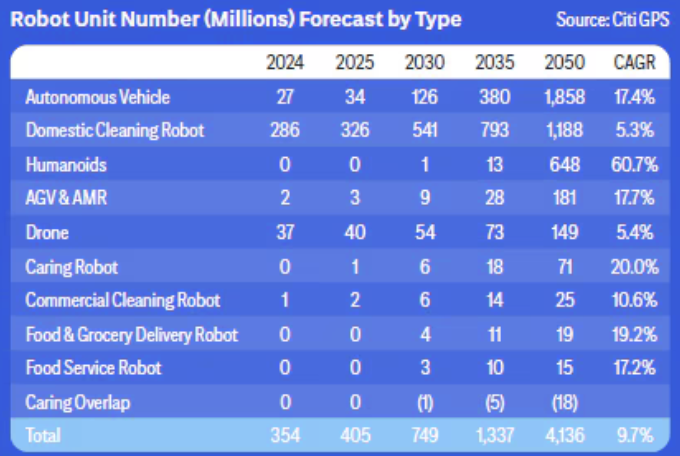
The leaps forward in AI, most notably visual processing, seem to have unlocked a major piece in this puzzle and make the above look more plausible to me. Here’s a couple more cases (like the Chinese New Year’s Show example above) that show the improvements in these models over recent years, and so gives an idea of the trajectory.

February 2025: Helix androids putting away shopping very slowly:

May 2026: Helix’s Figure 03 working a production line (and other things):

In a very direct test of a specific skill, there are contests in China in long-distance running for androids. In April 2025, one robot completed the half-marathon in 2 hours 40 minutes.

One year later, a robot completed the half-marathon in just over 50 minutes, beating the human record of 57 minutes (which immediately seems like a less relevant comparison).

I don’t expect this to be quick, so the slow initial commercial growth in the Citi forecast does look reasonable to me. I’m certain there will be massive bumps in the road as public perception and legal / insurance systems navigate around the inevitable accidents and abuses this technology will produce. But I now feel pretty confident that sci-fi visions of robot drivers, plant-pickers, and assistants are not at all fanciful.

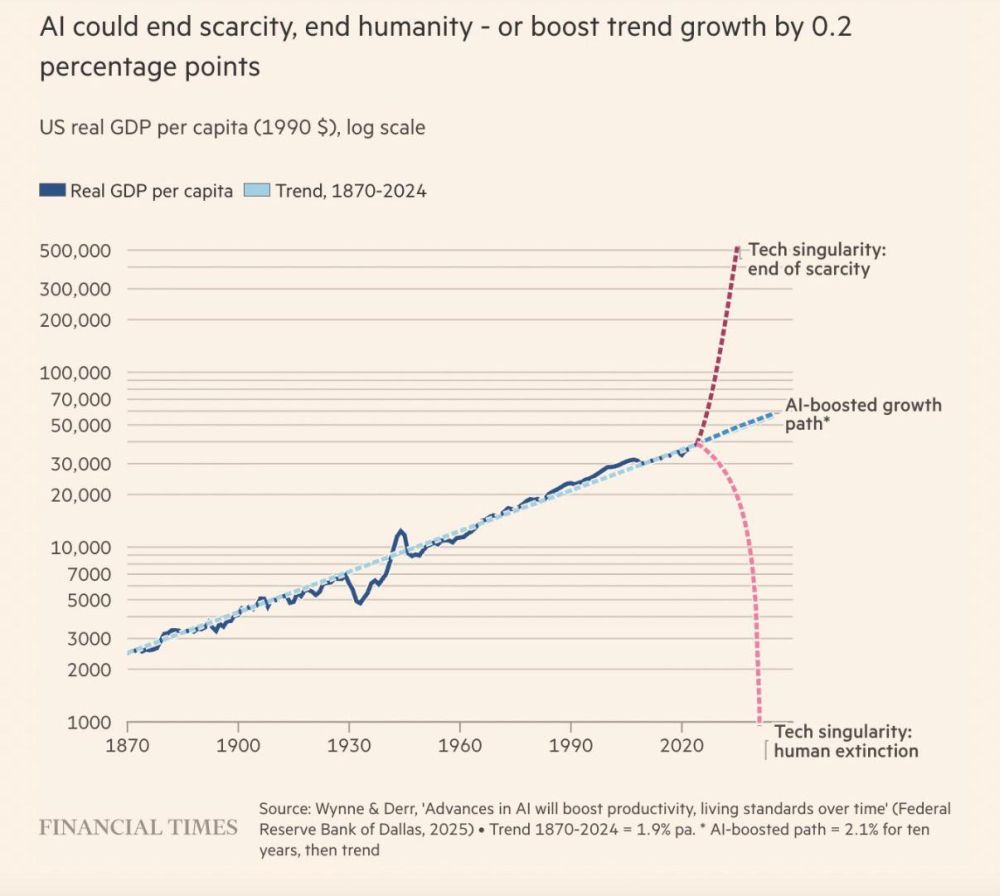
I’ve also been reading a lot about what people think will happen to the humans whose jobs have been replaced. To distil everything, the answer is that… the result will be a product of huge numbers of competing systems and feedback loops, and as such is impossible to predict. It’s a bit like this Financial Times prediction of GDP based on different AI scenarios, which is quite funny and frightening at the same time:
Music videos where effort is the trick

This Things is getting a bit heavy, so let’s look at some Music videos in which a beautiful visual effect is achieved, but the amount of effort that must have gone into it is tremendous.

Director: Michel Gondry
Artist: Kylie Minogue
Song: Come Into My World

Once again Gondry finds a way to visualise the repetition of the song in a video that just keeps getting more impressive:

How did he do it? Well, he explains it and the inspiration here

His explanation seems to take for granted an enormous amount of compositing work, all the more impressive given that this was in 2002 when computer-assisted tools were less well developed. That said, it’s Gondry – possibly he found an incredibly efficient way to do this that he’s not revealing here. Or he just takes that “enormous effort” part for granted because he does that regularly.

Director: Nick Goffey and Dominic Hawley
Artist: The Chemical Brothers (with vocals by Beck)
Song: Wide Open
Dancer: Sonoya Mizuno
Effects: The Mill

Starting with a close-up to assure you that you’re looking at a real human dancer, something impossible starts to happen. Make sure to stick around until 3:28 (or just skip there if you’re busy) in which the video casually does something even more impressive.

How did they do it? Surely to do that you would need some sort of motion-controlled camera or real-time movement tracking, re-render almost everything in CG and then carefully composite the live-action with the CG with pinpoint precision?! The answer is yes, that’s exactly what they did:

Director: Páraic Mc Gloughlin
Artist: Weval
Song: Someday

If you take carefully framed photos of everyday objects and architecture with repeating patterns and show them in sequence, you get a strange sort of stop-motion effect. I saw this trick first used in Michael Langan’s 3-minute video Dahlia (2008), then in Thomas Sauvin’s Recycled (2013) (seemingly no longer viewable but described here; a short snippet can be seen from 1’12” in this film festival trailer).  Páraic Mc Gloughlin pushes that idea even further with incredible smoothness, range and synaesthetic effect for Weval’s Someday (2019) music video (after about 21 seconds of build-up):

If you enjoyed that you could also try the video for IMANU – A Taste of Hope (Hallowvale) by Chris Takács and Kevin Rogerson; or enjoy spacelike slicing instead of timelike with the video for Max Cooper – Repetition by Kevin McGloughlin.

The AI Shovelware is here

Also in the category of marking developing technology, last time I wrote about the AI ‘trough of disillusionment’ referencing Mike Judge’s “Where’s the shovelware” article.

Well, true to how the Gartner hype cycle (sometimes) pans out, it turns out we were coming out of that trough.

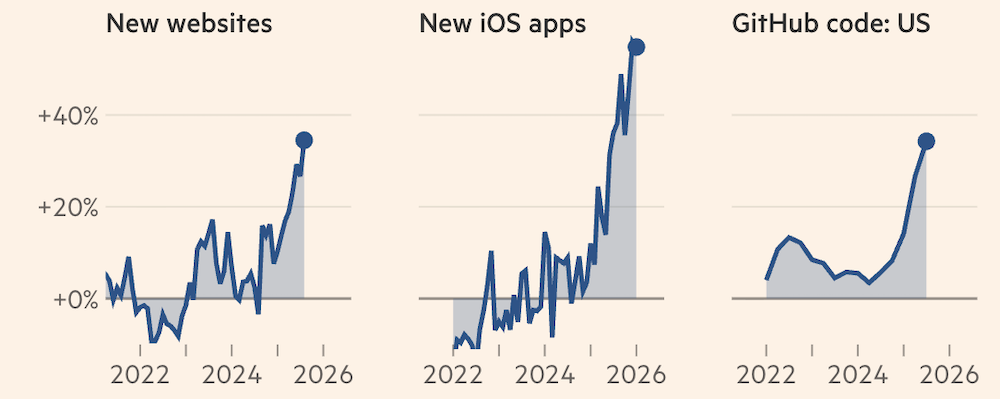
The financial times looked back into those same trends (paywalled link) in February 2026 and found recent upticks in websites, iOS apps and GitHub repositories:
In April 2026, Naavik did a detailed overview of the topic just for games, showing not much effect on PC (although a rise in AI-discosed games), but a huge effect on mobile (especially on Android), showing the number of publishers is up, and the relative proportions of success have remained about the same.

That last point is particularly interesting because the feeling in games is that there are already way more games than the market can sustain (so the vast majority do essentially no business), so an AI-driven surge in new games could just dilute success and make it even harder for anyone to succeed at making games. The counter-argument would be that with a wider range of games, more niches are filled, so more people buy more games – for example, maybe I buy 6 games a year, but if there were twice as many that were twice as appealing to me maybe I would buy 9. If, as Naavik found, the relative proportions of success are about the same then these two effects perhaps cancel out. Or realistically, there’s lots of other effects and that data isn’t sensitive enough to detect them or their true net effect, and also not enough time has elapsed to feel the effects, so let’s just wait and see.

Still this does put more pressure on the question of ‘discovery’ – I can’t buy those amazing games if I don’t know they exist. Most people who work in video games seem to want discovery to get solved through some clever platform design, but I don’t think that’s very likely:

  • If I knew what I wanted and could find games that meet exactly that, just maybe we could solve it, but people do not know what they want! I would never have searched for something like Outer Wilds or Portal – in fact if I had searched for either of those accurately it would have effectively spoiled the game – but they were exactly what I wanted.
  • This type of problem is approximately solved in social media, where algorithms can serve content people are likely to enjoy (well enough that they keep scrolling, anyway) – but I don’t think people play enough games for you to run the kind of predictive models that work there
  • It might just about work if you took as input everything about you (social media consumption, books read, films watched etc on top of games played), but nobody holds all that data (yet)… and we feel uncomfortable with anyone holding all that data.

So in the absence of all that, we just get marketing.

Or some sort of procedural AI-generated game starts out as what you thought you wanted and evolves into what you actually needed based on your real-time reactions. That sounds a lot like a dream, or perhaps a nightmare, both figuratively and literally.

Perhaps more likely, in the future maybe your household android tracks all of that contextual data about you locally, and can then make perfect recommendations?

  • Transmission ends, stretching for a note of optimism
Categories
New

Things February 2024: Naming, AI, Sarcastic songs

Aspirational Naming

Philosophy is a battle against bewitchment of our intelligence by language

Wittgenstein

Language is a strange thing. There are words with multiple meanings, in some cases even words with opposite meanings to themselves: contronyms, such as sanction, oversight, dust. Despite this we are generally pretty good at figuring out the meaning of even these words by context.

It becomes trickier when words have close but distinct meanings. Names in particular have power, and sometimes a name can exploit ‘adjacent’ meanings of a word, or bake in an assumption. Here’s some examples I’ve collected over the years.

Social Media. John B highlighted this to me back in 2008. As Web 2.0 was becoming a thing and the mainstream started to find ways to be social online, ‘social media’ became the term of choice. This baked in the assumption that social content could function as a new ‘media’ in the sense that it was a kind of content that you could put adverts in, like TV or newspapers. It took quite a few years to make that work financially, but that is exactly what happened. I do think it’s unlikely it would have gone a different way if we had called it something else – but sometimes I wonder.

Influencers. In a similar way, as the power-law curve kicked in for social media, some people became a lot more visible than others. That meant they could be used to sell stuff in a different way! By terming them ‘influencers’, the message is that the main thing they do is influence their viewers/readers – most probably to buy products that they just happen to mention. But is this really the best way to think about them?

Web 3. Somehow in all the hype and froth of the crypto frenzy, the idea was fomented that this represented a paradigm shift similar to Web 2.0, and the end result would be a collection of services and algorithms we should call Web 3. But the parallels are strange – in particular blockchain technology, while clever in many ways, does not naturally have the kind of scaling properties we would want for anything that looks like the web as we know it. What’s fun here is that the number ‘3’ has now been effectively reserved, so assuming blockchain doesn’t live up to the name ‘web 3’, the next big internet thing will have to find another way to go – my money is on ‘Internet 3.1’.

Crypto Winter. Speaking of blockchain, this is perhaps the most obvious example of a name with an assumption baked in. The metaphor of seasons is completely assumed: a winter will naturally be followed by a spring, and eventually a summer just as glorious as the last. But that’s not how it always goes – sometimes things just die! A more apt framing here is probably the ‘trough of disillusionment’ from the Gartner hype cycle – but that’s certainly less catchy. (Side-note, the value of bitcoin itself is having a bit of a ‘spring’ right now, but I’m less sure about the wider blockchain paradigm).

Fan Service. Moving out of tech, in manga/anime and now beyond, the term “fan service” arose to describe… let’s say moments in which the sexual gaze of the (usually presumed hetro male) reader/viewer is titillated by a particular choice of camera angle or staging of action. I suspect this term generally spread half-ironically, but the way it bakes in an assumption of who a fan is and what they want is not ideal, and can reinforce the implied gatekeeping of communities discussing this sort of content.

(There’s another meaning which is just ‘give the fans what they want’ in the sense of “see the cool super-powered person use their powers to the max!!”, which is a bit less problematic)

Statistical Significance. In statistics the term ‘significance’ has a very specific meaning; it tends to mean that the results of some sort of test ‘signify’ that two test populations are different in some way. But in everyday language, if we describe a difference or change as ‘significant’, we usually mean that it is large! Two things that have a ‘statistically significant difference’ may not be very different at all, or different in a way that is very unimportant, but the term’s connotations say otherwise. I think it may even be plausible that this ‘bug’ was viewed as a feature by the founders of these sorts of statistics, as it turns out they were a bunch of eugenics enthusiasts very keen to find ways to show that one group of people is different to another, as this long article quite fascinatingly lays out.

Smart Anything. Emergently, describing an object as ‘smart’ now means that it is connected to the internet. That isn’t always going to be a good idea, but the connotations of ‘smart’ suggest that it is.

Artificial Intelligence. The temptation with computers or even simple algorithms is to think of them like our own brains: taking some input, evaluating it, and taking an action as a result. We consider ourselves intelligent (arguably homo sapiens could also be on this list as a biased name), so it feels natural to describe a process that looks like this as some kind of intelligence. But like the two meanings of ‘significance’, intelligence can span a spectrum of behaviour (from low intelligence to high intelligence), but if we describe someone as ‘intelligent’ we mean they are at the higher end. So while it is arguably fair to describe even fairly simple algorithms as some form of ‘intelligence’, the term AI has the connotation of high intelligence. Great for anyone who wants to impress people – perhaps to gain funding – about some sort of tech endeavour. More on that later.

Natural Gas. Moving outside of digital technology, describing methane as ‘natural gas’ is a great piece of propaganda. It exploits the fact that ‘natural’ has positive connotations, while technically also being anything that occurs in nature – which includes a lot of things that aren’t nice at all. Looking it up, it does not seem as if the term was coined for this reason, but those connotations have more recently been leveraged to encourage use of gas instead of renewable energy.

This is all very well, but can I come up with better names for these things? Honestly, probably not. But here’s my suggestions anyway:

  • Social Media -> Digital socialisation
  • Influencers -> Social hubs
  • Web 3 -> On-chain paradigm
  • Crypto Winter -> Crypto disillusionment
  • Fan Service -> Titillation
  • Statistical Significance -> Statistically Signified
  • Smart anything -> Online anything
  • Natural gas -> Methane gas (technically there are impurities so it isn’t just methane, but you get the idea)

Turning Test reductio ad absurdam

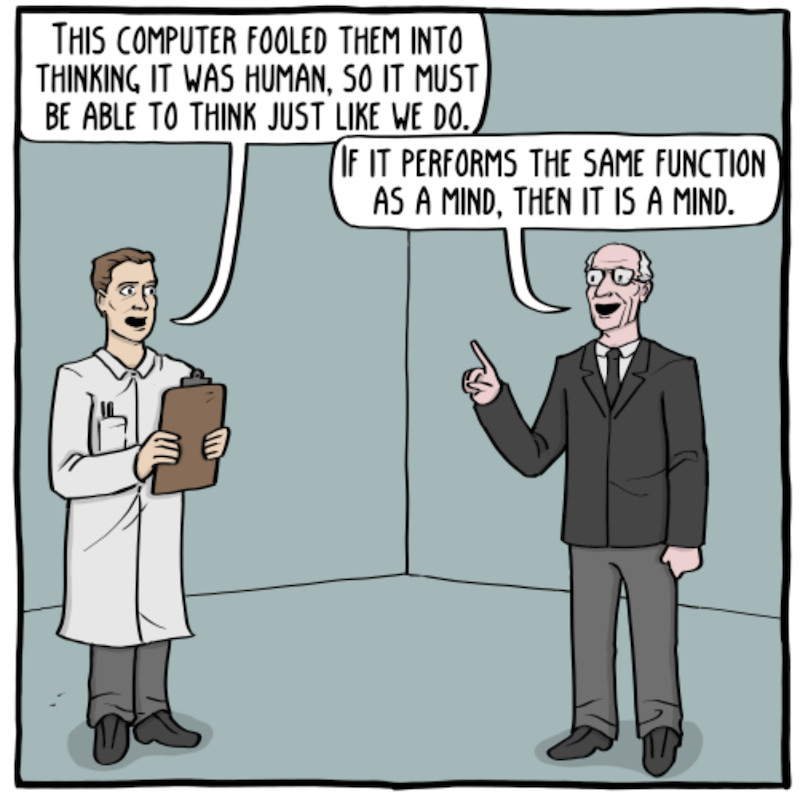
In pondering an approach to the question of whether machines could ‘think’, Turing proposed a test that eventually took his name: can a machine convince a human interacting with it through text that it is actually human?

Some extrapolate this rather too far and conclude that if a machine can do this, it proves that it can “think” or is “intelligent” (in the colloquial sense). Existential comics deploys a beautiful reductio ad absurdam to this argument that you should definitely read in full here.

(I tweeted this a long time ago but it’s well worth re-visiting, especially in the age of generative AI!)

Generative AI

As I’m certain Things readers will have noticed, AI became the new hot thing after crypto.

The ability to generate surprisingly plausible images from a text prompt surprised a lot of people, and the advances in that tech since have also been rapid and impressive. At first it was easy to laugh at how the ‘machine’ struggled to understand how hands worked or render scenes with multiple people in them convincingly, and then very quickly that became a solved problem (for the better models, anyway).

Just as that was happening, Large Language Models took hold, through ChatGPT in the most mainstream case. John B (him again, 15 years later!) pointed me at this purported ‘leaked Google memo’ on the topic which concludes with an excellent timeline of events describing how this came about.

This brought the ambiguity of ‘Intelligence’ and the Turing Test quite suddenly to the fore. LLMs solve some of the obvious weaknesses of previous language-generating-algorithms in that they can hold a pretty convincing thread of conversation. With a few guidance prompts and a less obviously superhuman typing speed, it could very likely pass the Turing Test in many cases. But it is a big mistake to consider it ‘intelligent’ or to actually be ‘thinking’.

First there are what is called ‘hallucinations’. (Note again the bias of the word – the most common use of the term is something that humans experience, tacitly encouraging us to think of an LLM as a mind). These are cases where the output says something completely fictional. I asked ChatGPT to list the solstices and equinoxes of all the planets in the solar system, and while it did a beautiful job of laying out the answers (much better than a Google search), it got quite a few of the answers completely wrong. I wouldn’t be too surprised if the most egregious examples of this can be fixed, but this problem will run deep because ultimately there is no algorithm for truth. It doesn’t necessarily show something isn’t ‘thinking’, but it can very quickly undermine an impression of high intelligence.

Second and more significantly there is no actual reasoning. It’s just a language model! It’s just producing words that look plausible in context! The fact it can give smart answers to some difficult questions does not mean any thinking is taking place. This can be tested by proposing simple riddles. My colleague Ben H challenged ChatGPT to figure out how someone could reach an object given some restrictions and a few objects to use (including a pencil and chair), and got a response of a sequence of steps that included “straighten the pencil by placing it between two sturdy objects such as the legs of the chair and gently pushing down on the middle of the pencil until it is straight”. There are layers of problems there: pencils are straight; you only need one sturdy object to straighten something; if you did need two they would presumably be close together in a way that chair legs are not.

It has taken me so long to finish this issue of Things that it feels like the generative AI hype has settled into a – perhaps shallow – trough of disillusionment, and generally the above concerns are I think widely recognised. The use-case of someone already being adequate at writing code and using ChatGPT to help you seems pretty strong.

Generative AI + Metcalfe’s law = massively expanded collaboration

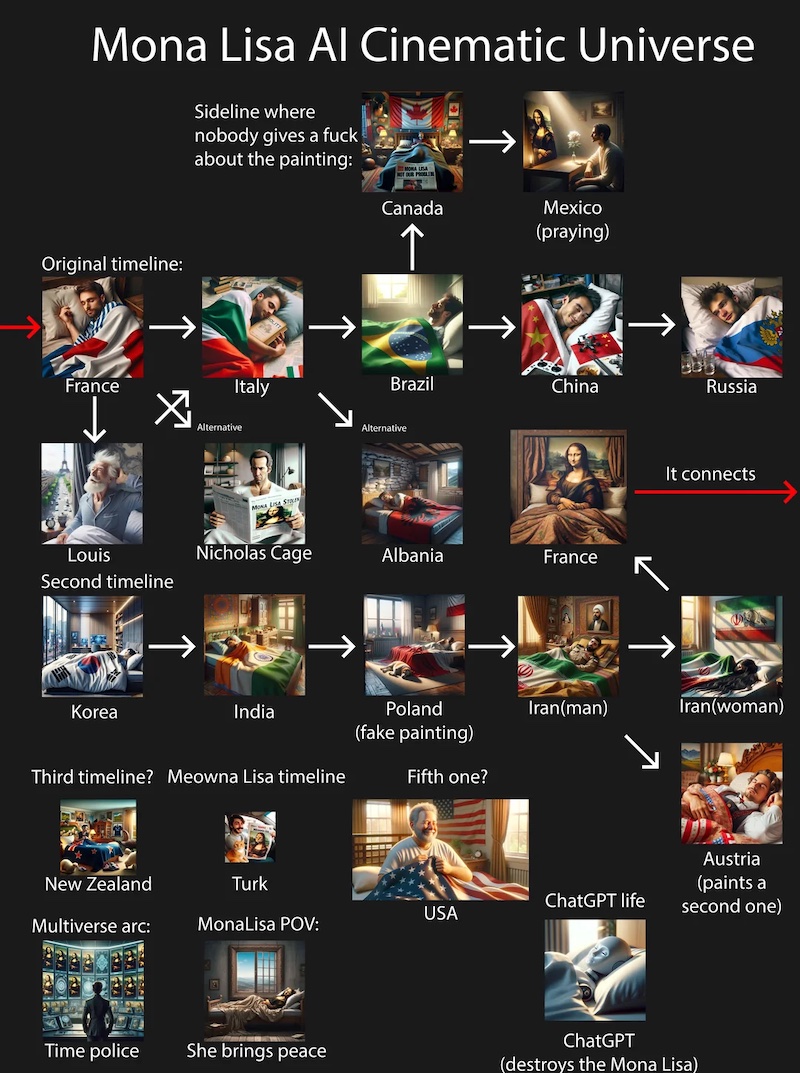
In terms of interesting new paradigms that are unlocked, this is quite frivolous but may be a sign: the Mona Lisa AI Cinematic Universe.

First, an emergent format in the ChatGPT Reddit is to generate an image with a prompt and generate more in sequence incrementing something each time (e.g. A cool dude who gets cooler each time, a marshmallow that gets angrier each time).

Then people subvert that format by deviating from the stated rubric to give a twist ending of some sort. Someone did “Average day in France“, so the increment is time – but the man ends up stealing the Mona Lisa. People then started expanding on that story with a day in the life of different nations, and the whole thing spiralled out – see the diagram above.

What I think is interesting here is you have a collaborative silly comic, but many more people than usual can contribute much faster, because anyone can write a prompt. It’s not a terribly amazing new emergent art form, at least not yet, but it’s something I think is categorically new!

Recommended Media

Video Games: Superliminal

Superliminal has a bit of a tough time because the closest reference game is Portal: a fairly short, linear, mind-boggling puzzle experience with a cute narrative framing. But Portal was a ludicrously good game, setting the bar very high. Superliminal unsurprisingly can’t reach that bar, and felt to me like it took a little while to find its feet, but it gets close enough that I think it’s well worth the time.

It takes perhaps just 3 hours to playthrough, which I found to be ideal. I recommend diving into it knowing nothing else, but if you need more convincing you can watch this trailer that lets you know what kind of approach it takes to puzzles.

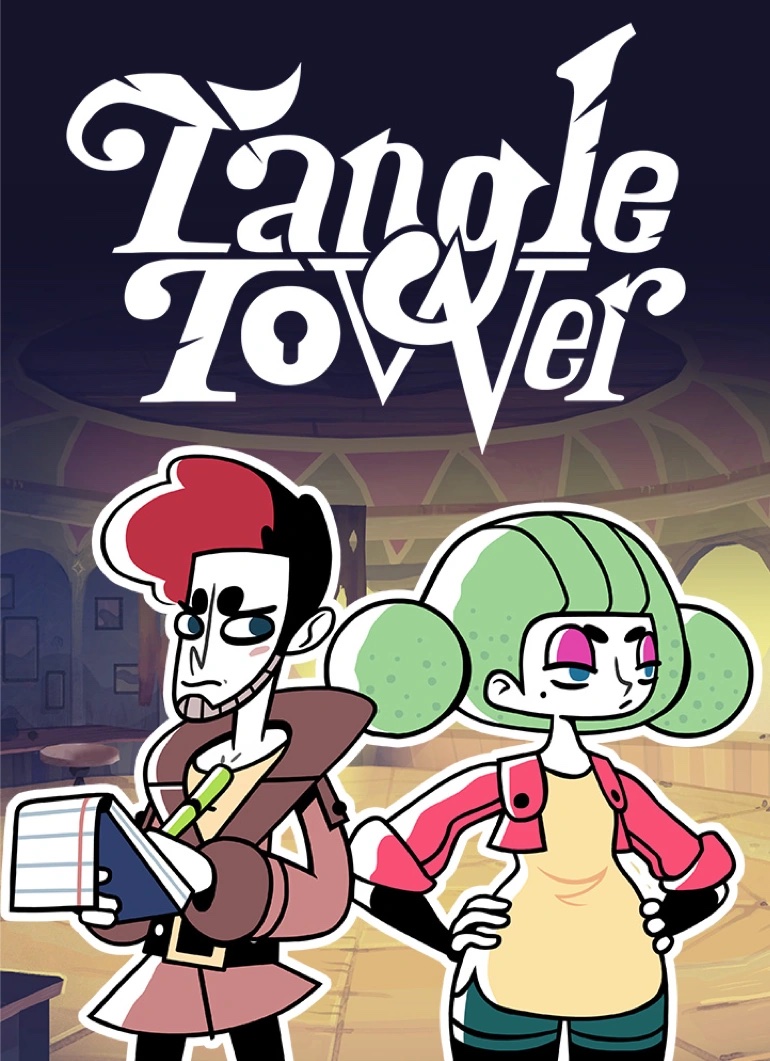
Video Games: Tangle Tower

I much prefer media that is outstanding in a few areas with a few flaws to anything that is uniformly good (but not great). I also love to see innovation in what a video game can be. This is exactly what I found in Tangle Tower.

Superficially the game most closely resembles a point-and-click adventure, but with a locked-room murder mystery framing. The ‘real’ game, though, is finding various clues, and talking to the nine suspects. You can talk to any suspect about any clue or any other suspect. That possibility space multiplies pretty quickly, and this is what enables you to try to be a ‘proper’ detective: by asking the most meaningful questions out of the very wide possible range. That can still get a bit overwhelming, but there’s a nice in-game hint system if you find yourself baffled or overwhelmed at any point.

What really sets the game apart is that even though the above design makes it dialogue heavy, every line is voiced, and the writing is great and the voice acting is brilliant, and the art and animation of the characters is stylised and fantastic! This completely elevates what could easily have been a slog (I have seen a lot of bad writing in games) to something I found consistently entertaining.

The ending was a bit disappointing, but I did not mind this at all as the journey was far more important than the destination. At around 6 hours to get through, I found this another highly enjoyable and reasonably short indie game.

TV series: Star Wars – Andor (Disney+)

Although I don’t have it in writing, I’ll always let people know that I anticipated the Star Wars universe as ripe for TV series from around the release of Episode I in 1999. It’s such a rich playground for stories of all kinds. What I didn’t properly understand then was that the budgets required to pull that off were not reasonable until the last few years, when the streaming wars pushed budgets up and advances in technology pushed the cost of special effects down to actually meet in the middle.

That said, despite being a weirdly huge fan of all of the Star Wars films (aaalllll of them!!!), I didn’t understand the hype around The Mandalorian, I found The Book of Boba Fett infantile (even for the kid-focussed Star Wars universe), and Obi-Wan astonishingly non-compelling. I was about ready to give up on the whole concept until people started saying how great Andor was.

It took a few episodes to get there but those people were absolutely right. Andor does what some of the best TV series manage to do (going right back to The Wire), introducing interesting characters on all sides of a conflict and playing things out in a compelling way.

I really hope the upcoming seemingly endless stream of Star Wars TV series continue to explore new tones and themes, as my original optimism for the whole endeavour is now fully reignited.

[Update: this Things has been so long in the writing that another series came and went: Ahsoka. It was… okay.]

Film: Spider-Man: Across the Spider-verse (2023)

Back in 2018, Spider-Man: Into the Spider-verse finally broke the mould in feature-length animation, introducing some brilliant stylistic innovation that has since been widely copied. I wasn’t sure how they could up the ante in a sequel, but they found a way – actually multiple ways. Anyone at all interested in animation, or superhero stories with a bit of a meta theme should seek it out:

Film: The Adventures of Buckaroo Banzai Across the 8th Dimension (1984)

This is something I can only recommend if you like weird/cult 80’s films and want an amazing example of how not to tell a story and introduce a world. Stand-out features:

  • Peter Weller (Robocop) as Buckaroo, a does-it-all hero (musician, brain surgeon, scientist…), like a nicer but more violent Dr Who
  • Also stars Christopher Lloyd and Jeff Goldblum!
  • Had a budget similar to Star Wars (1977)… not all of which shows up on screen, but allows it to be a lot weirder than other bad films
  • Features a sci-fi car accelerating to break a law of physics, and came out around 5 months before Back to the Future started filming. Interesting!

If that sounds at all interesting to you then do check it out. And if you do, I highly recommend following it up with the 7th episode of Guillermo del Toro’s Cabinet of Curiosities, ‘The Viewing’. Directed by Panos Cosmatos, this is similarly quite weird (although a lot more stylish and competently put together), but more importantly stars Peter Weller again, nearly 40 years on, in a role I enjoyed imagining as a much older Buckaroo Banzai after decades of weird adventures and a bit of time travel.

Podcast: The Sound: Mystery of Havana Syndrome

I’ve not got much into podcasts but this one was well worth seeking out. Nicky Woolf gets quite seriously investigative into exactly what is going on with the Anomalous Health Incidents (AHI) widely termed ‘Havana Syndrome’, with interviews with a very impressive range of relevant folks.

AHI have been variously attributed to sonic or electro-magnetic weapons, or psychogenic effects triggered by the sound of particularly loud crickets. I was left with the strong impression that, quite amazingly, all of those explanations are probably true to different degrees (although it’s EM rather than sonic weaponry that looks most likely).

The documentary also features some excellent original music, and while it occasionally veers into an overhyped sense of “what a dramatic new twist to this mystery!! This overturns everything we thought we knew!!!” it’s overall as clear and thorough as you could reasonably hope for in such a complicated topic.

Check it out here. (The name is not sufficiently distinct to just say ‘find it wherever you get your podcasts’)

Book: The Vegan Baking Bible

This book was not named lightly. Karolina Tegelaar is extremely intense on the subject of vegan baking, and from what I’ve seen of it so far the book lives up to the name. I particularly enjoyed her foreword, which Clare pointed out to me, and which reads like a mission statement carved into a stone tablet – as likely to scare someone off as it is to convince them to buy the book! Here’s an abridged version of it:

I hate the low standards that are so common in vegan baking. I have hated them ever since I became a vegan over a decade ago, when I realized what people would accept and what was served as vegan. The whole point of baking is that it should be luxurious and decadent. My feeling is that anything you bake that doesn’t taste really good is pointless. Therefore, this book is not just one baking book among many. It is not just about feel-good baking, it is packed with information. It does not just want you to bake cakes, it wants you to learn a new way of baking and make the world a better place at the same time. […]

There has never been a basic book about vegan baking, but one like this couldn’t have been written before as the methods needed to succeed did not exist until now. […]

I have developed and test baked all the recipes in this book many times so that you can succeed when using them. However, as I also discovered and developed many of the methods used, it is important that you read the instructions at the beginning of the book so that you understand how they work. Particularly important is the section on the different stages of whisking aquafaba, as otherwise it is easy to overwhip the aquafaba and the sugar, which produces poor results.

Wow! That’s really how it ends too. Aquafaba is critical.

Awful abbreviated aphorisms

Language is determined by usage, and the same thing is true of sayings or aphorisms. But what I find particularly fascinating is when that usage turns a saying completely on its head. When this happens, it tells us something about human nature.

Here’s the examples I have collected so far.

Build it and they will come

People think this is a line from Field of Dreams, and it is used as a short-hand for the idea that if you make or build something great, the world will notice and appreciate it. But in the film, nobody says this – the line is actually “If you build it, he will come”, referring to the ghost of Kostner’s characters father. Still, the idea of it does sort-of happen in the movie.

I think as humans we love the idea of this meritocracy. The problem is it’s just not true. My favourite example of this is the game Among Us, which is wildly popular, but existed for 2 years before it actually got picked up among streamers and became popularised. If the saying was true, the game would have taken off much sooner.


One bad apple…

The original “one bad apple spoils the bunch” gets shortened to “one bad apple” or “a few bad apples”… and in so doing completely loses the original meaning. When an organisation is found to have a few corrupt members, those in leadership like to characterise that the problem is not pervasive. It seems unintentionally revealing that this is the phrase that they fall back on, describing the problem as limited to “a few bad apples”. By invoking this expression they inadvertently invite us to consider that the actions of the corrupt few will spread to the rest.

Hell hath no fury like a woman scorn’d

From William Congreve’s 1697 play, the original phrasing is “Heav’n has no Rage, like Love to Hatred turn’d, Nor Hell a Fury, like a Woman scorn’d”. By adopting a fragment, the quote seems to be about women specifically, and takes on a vaguely derogatory and perhaps misogynistic tone. But if we remember the quotation in full we actually have a much greater and more important truth that tells us something about the kind of toxic fandom we see today.

Great minds think alike

Many aphorisms are not so much great truths as they are short-hand for an idea. For example, “Many hands make light work” sounds good but if you want to argue the opposite you say “Too many cooks spoil the broth”. In this particular example, the aphorism and counter-aphorism are wrapped up in one when given in full, the full thing being “great minds think alike, but fools seldom differ”. Taken as a whole, it tells us that agreement does not imply rightness or wrongness. But it seems we like the idea of social proof so much that we only keep the first half.

Sarcastic songs

Last time I listed some songs where the motif of repetition implied endorsement, sometimes to weird effect. More generally, it’s easy to assume any topic sung about is an implied endorsement of whatever the lyrics are saying. This doesn’t work if a singer is being sarcastic or satirical.

Randy Newman wrote a song that was very mean about Short People (sample lyrics: “They got little cars that go beep, beep, beep; they got little voices goin’ peep, peep, peep”). The song is of course meant to be a satire about prejudice, and indeed has lyrics in the bridge running against this prejudice, but some people still took it seriously and he even received threats about it.

(People don’t notice the countervailing bridge lyrics in much the same way as they don’t notice Meat Loaf giving the exact list of things he won’t do for love: the lyrics are simply less audibly / catchily delivered)

Janelle Monae’s “Americans” swings between two very different viewpoints, which will confuse an uncautious listener, including things you wouldn’t expect her to say such as “I like my woman in the kitchen, I teach my children superstitions”. In her case, I think her general vibe makes it pretty clear these statements are not intended sincerely.

Dire Straits ‘Money for Nothing’ has some very catchy turns of phrase intended to denigrate rock stars: they get “money for nothing, and chicks for free”, and so on. Mark Knopfler has described how he was inspired by a man working in an appliance store commenting on the music videos playing on MTV on the display televisions. It seems that from Knopfler’s position these remarks were amusing since they are pithlily expressed but untrue, coming ultimately from a place of envy. However, if this is the ‘joke’ it certainly looks like an example of ‘punching down’, and I would say… that ain’t working.

  • Transmission ends
Categories
Special

Things July 2017: Archive Adventures – part 1

In November, Things will be 10 years old. Since the beginning, I’ve collected an archive of interesting things, and at various intervals then created Things out of that archive. I tend to collect slightly more things than I publish, so the archive has grown. Rather than cull it, I’m going to just put them all out in two big catch-up editions. In this edition: Stories, Technology, Imagery, and all the Puzzles. This is going to be intense!

This Just In

Before I get to the archive, a couple of recent things.

Damien Henry’s video for Steve Reich’s “Music for 18 Musicians” makes excellent use of machine learning for art. Using video shot from a moving train, an algorithm learns how to predict what the next frame will look like. Every 20s into the video the amount of learning used increases. The result is fascinating, and perfectly complements the music. You can skip through the video to get an idea of the effect, but it’s best played in full!

There is an awkward vein of humour in which comedians interview (often) unsuspecting subject-matter experts in a non-serious manner (Philomena Cunk interviewing Brian Cox is one I don’t mind so much). Superficially, Werner Herzog sometimes takes a similar approach in his documentaries (noted in Things 118 in 2012, “Please describe an encounter with a squirrel”), but there is a hidden earnestness behind his questions. If you’ve never seen any of his documentaries, this excellent short clip on penguins shows you what you’re missing.

Stories

I think via Richard L, here’s an interesting piece on Plots not involving conflict.

In some stories/fables/myths the inciting incident or key point of drama is a character attempting to do something different to normal. In old stories, the character often fails and is punished, the moral being “know your place” (for example, the crow that tries to sing and in so doing drops a piece of cheese). In more modern stories, the character often succeeds and is rewarded. Is that generalisation true though? And what does it mean? I was going to collect examples of each and try to see a pattern, but never ended up doing that, so I’ll just leave it here as an unfinished thought.

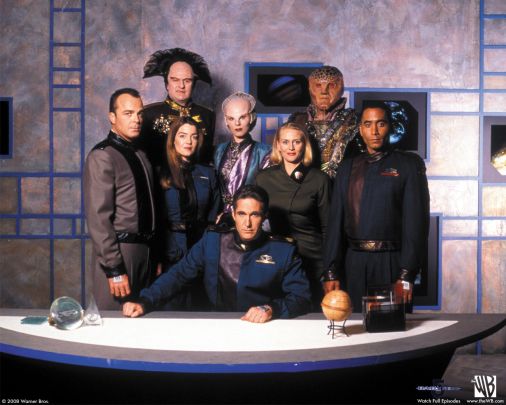
The Cosmology of Serialised Television is an essay by David Auerbach which categorises long-running TV fiction by cosmological universe types: Steady State, Expansionary, Big Crunch. I didn’t find it particularly useful in terms of identifying solutions to the intrinsic storytelling problems of the medium, or even uncovering hidden gems (just the expected “Everything is terrible except for The Wire and Babylon 5“).

Still, it’s a lot of fun to read and nod along to, with some great terse summaries along the way, for example:

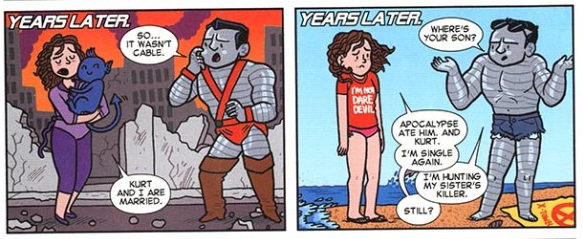
“So comics evolved by directing creative effort away from any moments of quality and toward large-scale creative bankruptcy”

See Maris Wicks’ 16-panel summary of Kitty Pride’s relationship with Colossus (penultimate comic in this post [dead link, try here – T.M. 7/4/21]) for a great example of this.

Choose Your Own Adventure

One of my favourite kind of stories is any subversion of the “Choose your own adventure” format. Previously on Things I’ve linked to Luke Surl’s perfectly terse ‘Free Will‘ page. As an implied CYOA, this previously-linked Beaver and Steve comic also remains a classic.

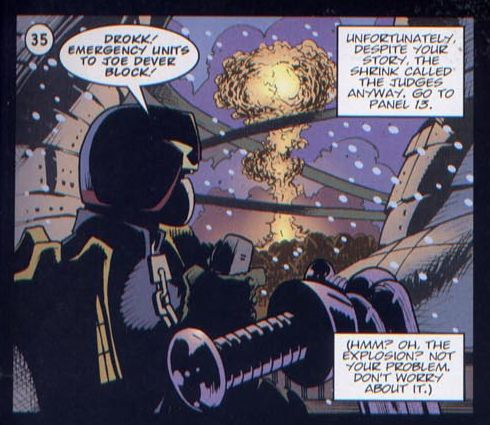
The “Prog 2012” issue of 2000AD featured a story called “Choose your own Xmas”, and subverts the format while also shattering the 4th wall. It’s completely brilliant but isn’t online so you’ll just have to trust me and buy or borrow it.

Viviane Schwarz also subverted the format beautifully to convey what it’s like to suffer from anxiety.

Working within the extraordinarily tight constraints of having a fixed panel and art layout, Ryan North still found a way to make a CYOA version of Dinosaur Comics.

Save The Date (recommended to me by Tarim and Richard L, available for free on Windows, Mac or Linux) leverages the Ren’Py ‘visual novel’ engine in a rather clever way, and if you’re interested in games and storytelling, have 30-60 minutes to spare, and can tolerate an apparently high rate of failure, you should give it a go. It could perhaps have delivered its message more elegantly at the “end”.

Also via Richard L, Trapped In Time (pdf) is a nice twist on the traditional choose-your-own-adventure format that leverages the format in a few interesting ways I’ve not seen before, and actually works very well as a pdf!

And I should mention this just in – browser-based interactive time travel fiction, One Night in Skegness, by Matheson Marcault (Holly Gramazio and Sophie Sampson). More time travel, but in a more relaxed way.

Technology

Perhaps surprisingly, a link about technology that sat in my backlog for 5 years has become more interesting with age. John B recommended the article, in which Alexis Madrigal laments that (in 2012), internet startups are just retreading the same ground and no longer promise to revolutionise our lives. John also pointed out the comment below the article by Urgelt (comment link doesn’t seem to work, wait for comments to load, which they often don’t, then find ‘Urgelt’ in the page). Urgelt more precisely categorises startups into those that grow the economy vs those that just take market share from existing businesses, and the issue is that most startups are falling into the latter category.

Both make a very interesting read 5 years further on, leading one to ask: has anything changed since then? Two trends jump to mind.

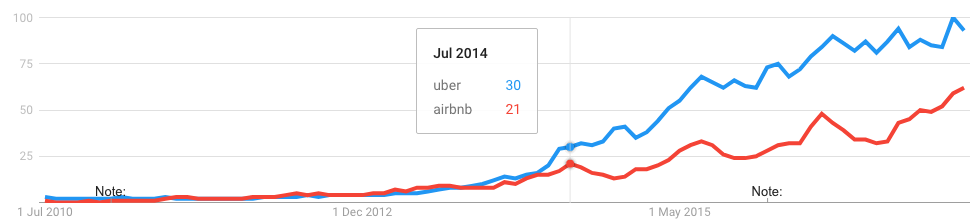
The Gig-economy-style startups (Uber, Deliveroo, AirBnB) suggest major changes, but might not actually scale. Uber charges around half of the true cost, subsidising the rest in a bid to achieve market dominance when driverless cars arrive; Deliveroo similarly rides an unsustainable cost/charge balance for much the same reason; only AirBnB arguably doesn’t fit into this category as the market sets the price.

Crowdfunding seems to be a more impressive development. In 2012, Kickstarter was just turning the corner, and Patreon is now in the ascendancy. From artists/game-makers that I follow, these services genuinely seem to be creating viable revenue-streams that were not previously available, to the benefit of culture in general. For example, Captain Disillusion (referenced in Things March 2015 and Things 17) was never mass-market enough for ad-revenue to be viable, but now raises sufficient money from Patreon to work on his videos pretty much full time.

In more “modern life is terrible” news, here’s an article from Cracked in late 2013 that is really just an enjoyably angry and sarcastic rant about clickbait content-farming. I remember at the time thinking that, if nothing else, the clickbait headline style would have to change as humans will fall for anything once, or maybe a hundred times, but eventually will develop a sort of semiotic herd-immunity to these well-dressed empty promises. Four years on… have things changed? Well, if nothing else, Facebook is at least attempting to deprioritise these sorts of headlines; more specifically, headlines that withhold key information, and headlines that senselessly exaggerate the content.

Imagery and Comics

Wondermark on the thought-experiment of money having a continuity rather than just being an abstract quantity of value. Wet owlsInopportunely placed stickers [Dead :\ – T.M. 4/7/21]. Bikes recreated (digitally) from drawings. The Door to Hell [Gone, try here – T.M. 4/7/21]  “They set the hole on fire, expecting it to burn itself out of fuel in a few days. Now, some 42 years later, it is still burning”.

Puzzles/Questions

Collecting all unused puzzles here is probably too intense, but I quite like that about it, so I’m doing it anyway.

1) 2D News

Sci/tech news is often quite one-dimensional, revealing a single scientific discovery or technological advancement at a time. As a thought-experiment, try combining two or more such stories from the past year into something amazing. For example, advances in drone technology + advances in ‘invisibility cloaks’ = army of invisible drones. Finding loads of other planets + anything = awesome.

2) Put Put boat

A toy Put Put boat has an amazingly simple heat engine, which you may recognise from the film Ponyo. A candle heats a small boiler; some water in the boiler vaporises but cannot escape, generating pressure that pushes the remaining water out a pipe. The momentum of the water keeps it pushing out, leaving the inside of the boiler with low air pressure. As a result, water then rushes back in, and the process repeats. Water thus repeatedly enters and exits a pipe pointed out the back of the boat, which then travels forward in a halting manner. The puzzle is this: why does the boat actually move forward, instead of just moving back and forth, given water is just going in and out?

3) Bernoulli vs the Train Window

In a similar vein to the Put Put boat, we have the Bernoulli train window problem. Bernoulli’s principle roughly states that faster moving air acts as if it has lower pressure. The classic demonstration is to hold a piece of A4 paper by one end in front of your chin so it droops downwards away from you; by blowing over the top, the pressure is reduced, and the piece of paper rises up due to the higher pressure underneath it.

A similar effect could be seen in an old-fashioned push-to-close narrow train window. If such a window was open and the train entered a tunnel, the window would slam shut. Or, would a shut one blow open? Depending on whether you take the perspective of the tunnel or the train, the faster moving air is on one side of the window or it is on the other. So which way does the window go?

4) Catbird seat

The Catbird seat is one of those puzzles I like because you can solve it with drawings and trigonometry, and then you can solve it better with simpler drawings and simpler trigonometry, and then you wonder if you can solve it in some kind of purely intuitive manner.

5) Shape of a Harp

When plucked, a longer taut string makes a deeper note. A harp has progressively longer strings to cover a range of notes. However, even though the interval between each note is the same, the length of the strings does not change linearly, or even following a simple curve, but rather an S-curve. Why is that? I thought this question might have a nice intuitive solution that could be reached by reason rather than by physics, but the answer is a bit more disatisfying, so this question remained in my backlog unasked. If you don’t want to figure it out (and my personal opinion is it’s not that interesting to do so), you can read about it here, although you’ll need the internet archive page for the harp citation.


Not a harp, but the principle is the same

– Transmission finally ends

Categories
New

Things November 2015: Movie ratings, Pain, Empathy and Expathy

Movie Rating Distribution

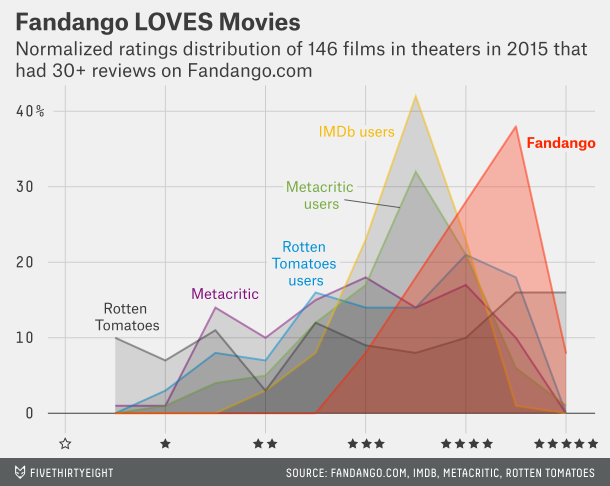
Walt Hickey was curious about the ratings on Fandango (which are clearly suspect), but in his investigation he brought together this nice collection of rating distribution data:

Just as I found when considering the ratings of animated movies, IMDB ratings tend to span around 5.5 to 8.3, whereas Rotten Tomatoes actually spans 0% to 100%.

Check out the whole thing to discover some of Fandango’s shenanigans.

Pain is Really Strange

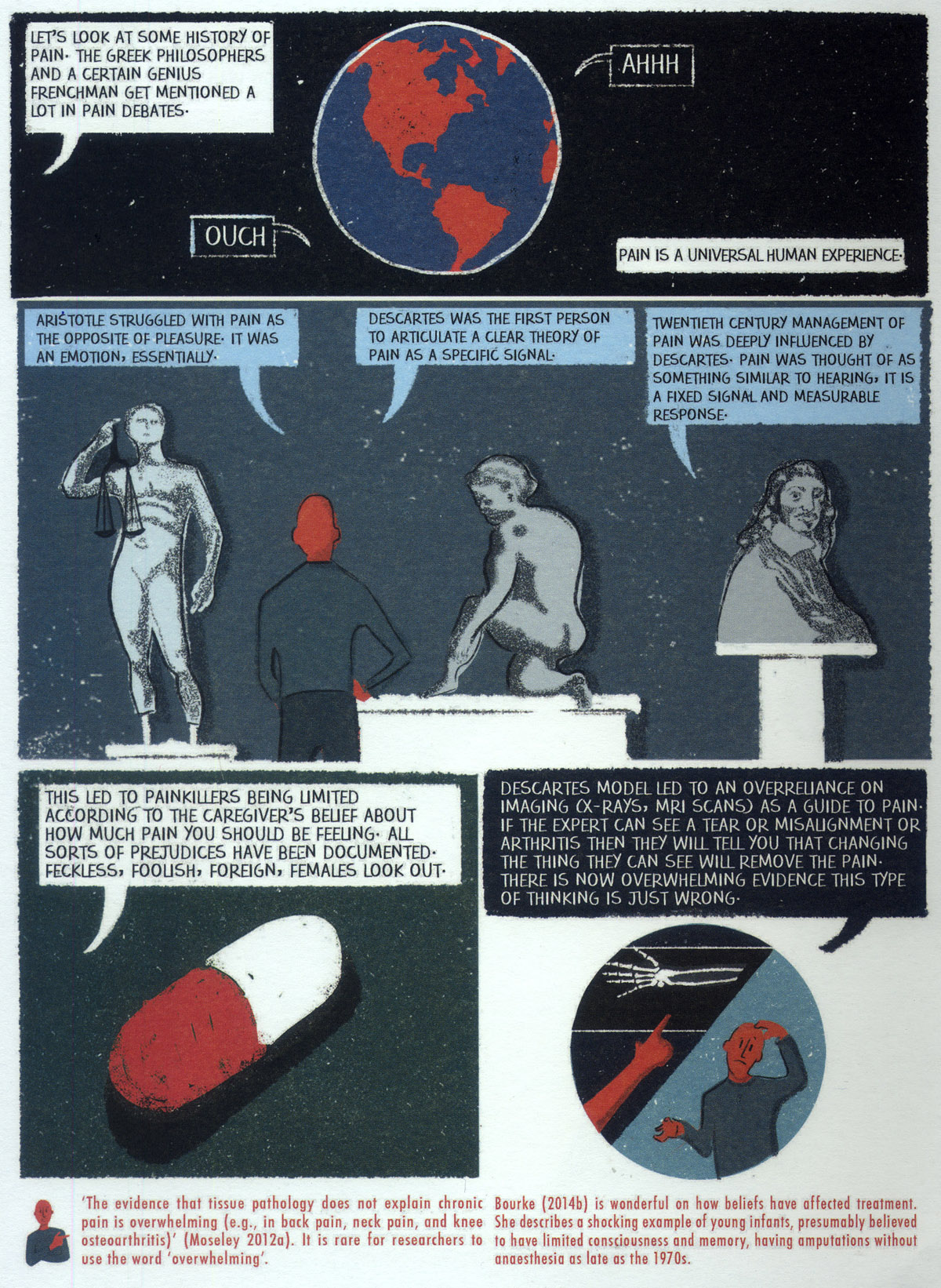
For excellent research and presentation of a complex and important topic, I highly recommend the comic Pain is Really Strange by Steve Haines and illustrated by Sophie Standing:

Copyright © Steve Haines 2015, Illustrations Copyright © Sophie Standing 2015, reproduced by permission of Jessica Kingsley Publishers

The key insight is that pain (and particularly chronic pain) does not correlate reliably with tissue damage, with psychological / neurological factors also playing a huge part. I was particularly interested to find out that the term “slipped disc” is not only innaccurate, but can actually cause a patient to experience more pain than if a more benevolent-sounding term is used!

I give this the Thing of the Month award. Go check it out on the publisher’s site or put it on a Christmas wishlist at Amazon.

(Also just out, Trauma is Really Strange, which I assume to be similarly good).

Mobile Game: Horizon Chase

https://www.youtube.com/watch?v=JrfuIKYrfyQ

If you enjoyed any racing games from the 80s or early 90s, Horizon Chase is a brilliant throwback to the gameplay of that era. You can buy it on iOS, or, in a fascinating nod towards the different store design that represents a whole other subject I’ll get to one of these days, you can get the first few levels for free before paying to unlock the rest on Android.

Three things to know:

  • Features fake driving physics, which is more fun than real driving physics! (I found the article about how they achieved this quite fascinating).
  • Your car has a slower acceleration but faster top speed than all the others! This means every race is about overtaking your way from last place to first, which is the most fun thing.
  • The soundtrack is chiptune-tastic and by Barry Leitch if that means anything to you.

Empathy vs. the Viral Straw Men

Empathy: Understanding the experience of others.

Othering: Explicitly or (more often) implicitly suggesting a group or particular person is somehow “different”, with intent to slightly turn the listener against that group/person.

These two concepts are often tied up with our tribe-like identities: when someone we consider to be “one of thus” says something, we tend to empathise; when someone from an opposing tribe says something, we consider them ‘Other’ and tend towards the opposite of empathy – I don’t see a good term for it but we could call it “expathy”.

The Daily Mail provides regular examples of this. News stories about people the paper wants us to feel sympathy for will emphasise the traits that align them with the presumed Mail readership’s tribal identity: atomic families, hard-workers, church-goers.  Stories that tilt the opposite way will make note of how their subjects differ from this group: single mums, people on benefits, followers of other religions or atheists. Describing a group of people as a “swarm” is an Othering technique.

As is often the case, it’s easier to see this mechanism at work in others than ourselves. A liberal encountering a conservative expressing their views on wealth redistribution might demonstrate expathy by assuming the conservative hates poor people, worships money, and is selfish – but the conservative may be none of those things, and genuinely believe that if policy reflected their views perfectly, everyone that truly “deserves” success would get it. (You can tell I’m a liberal and still can’t shake the expathy from the distancing quotation marks).

Similarly, a conservative encountering a liberal expressing their views on wealth redistribution demonstrates expathy when they assume the liberal is blind to real-world complications, and/or that they are some kind of Western-society-hating communist.

If you want to understand someone and possibly even try to change their mind, empathy rather than expathy seems a good place to start. I think this is what lies behind the quote:

Darkness cannot drive out darkness; only light can do that. Hate cannot drive out hate; only love can do that
– Martin Luther King, Jr

If you need more practical advice on how to do that, Daniel Dennett has it:

1. Attempt to re-express your target’s position so clearly, vividly and fairly that your target says: “Thanks, I wish I’d thought of putting it that way.”

2. List any points of agreement (especially if they are not matters of general or widespread agreement).

3. Mention anything you have learned from your target.

4. Only then are you permitted to say so much as a word of rebuttal or criticism.

I think this is particularly important as the tribe-shaping influence of social media means that content which mocks straw-man versions of opponents’ views goes viral but only serves to polarise us and silence meaningful debate.

Digital Culture update: Music Industry Seems Fine Actually

I’ve  been very curious to know the impact the internet has had on the music industry now that the dust has somewhat settled. More importantly, how are the actual musicians doing? John B sends in this NY Times article which does a wonderful job of rounding up the pertinent data (for the US at least), and finds that things are actually looking pretty good.

Things updates: Propellers and Music

Back in Things 80 (September 2010) I shared a surreal photo of a spinning propeller generated by the rolling shutter effect. Richard sends in a link to these lovely animations that make this process much clearer!

After discussing various ways music can be reworked last month, people continue to send in interesting examples.

Deb sends in a rare example of the ‘remix’ in which the lyrics are the only part that has been preserved, with Tom Basden’s version of Mamma Mia:

For my part, I realised I forgot one of my all-time favourites, The Apples’ jazzy instrumental take on Rage Against the Machine’s famous Christmas number 1, Killing in the Name:

Laurence points to the strange outlier that is the French version of the A-Team theme tune, complete with weird lyrics. He further provides an example concatenating as many examples of reworking as possible in a series with Hooked on a Feeling, which I paraphrase here:

  • The original is by B.J. Thomas
  • This was … somethinged … and had the ‘ooga chaka’s added by Blue Swede (This is the version that most people know from ‘Reservoir Dogs’ and ‘Guardians of the Galaxy’.)
  • The Blue Swede version was covered by David Hasselhoff
  • And the Hasselhoff version was relyriced by David A. Scott of Literal Video:

Is it possible to find a longer string, or one covering more types of rework?!

– Transmission finally ends